

Scan for full recipe
How to Boil Eggs
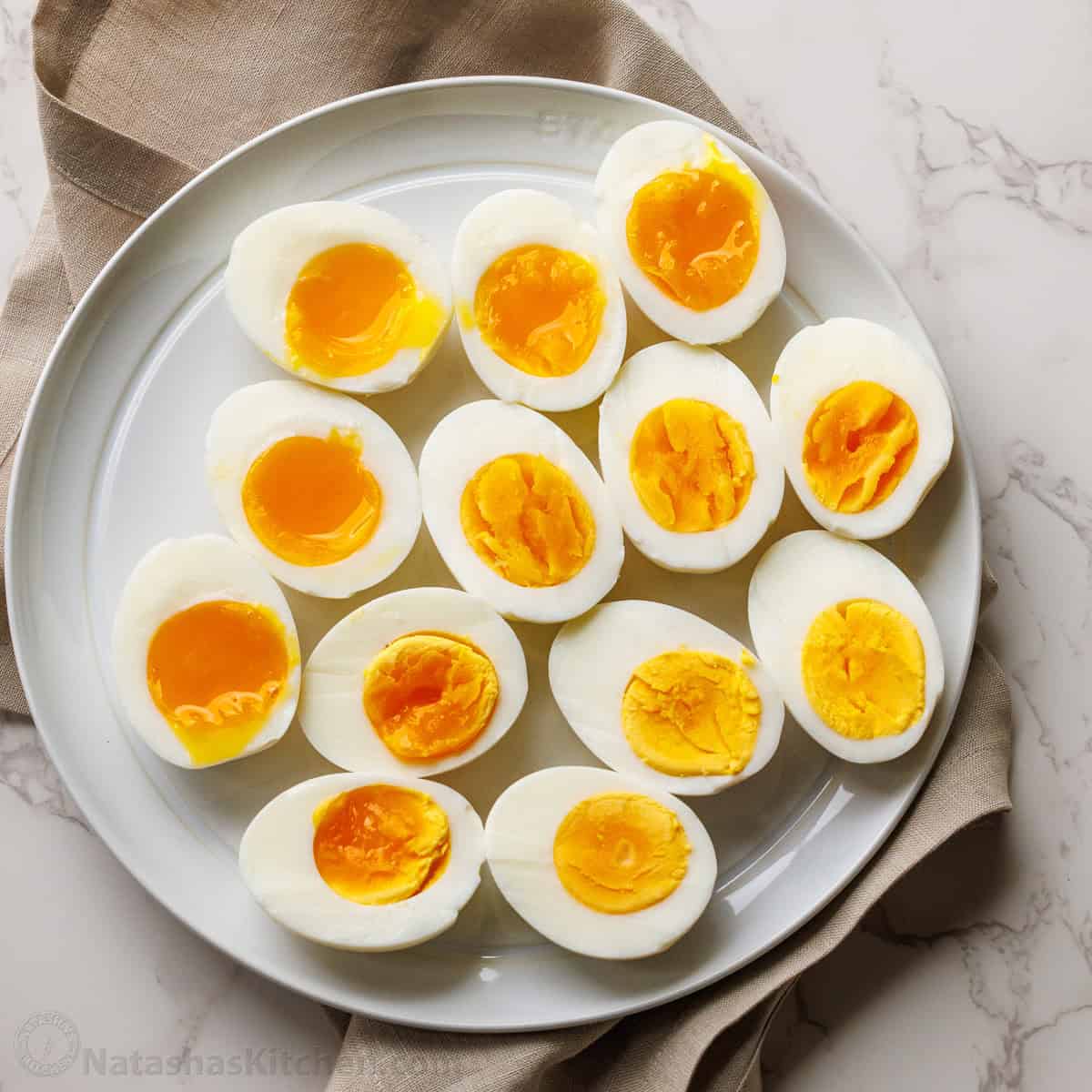
Learn how long to boil eggs for runny, jammy, medium-set, or hard-boiled yolks. Starting with cold eggs in boiling water gives consistent results and makes them easier to peel.
Ingredients
- 8 large eggs, cold from the refrigerator (6 to 12 eggs also work)
- 5-6 cups water, or enough to cover the eggs by 1 inch
Instructions
- Fill a large saucepan with enough water to cover the eggs by 1 inch. With the lid off, bring the water to a rolling boil over high heat.
- Gently lower cold eggs into the boiling water (a spider strainer or slotted spoon is helpful), taking care not to crack them.
- Reduce the heat to maintain a steady, gentle boil so the eggs do not bounce and crack. Start the timer as soon as the eggs enter the water and cook for 6 to 12 minutes, depending on your desired doneness. See the timing chart below.
- While the eggs cook, prepare a bowl of ice water. As soon as the timer ends, transfer the eggs to the ice bath and let them chill for 10 minutes before peeling or storing.*
Notes
Boiled Egg Timing Chart:
- Boil 6 min: Runny yolks with soft-set whites
- Boil 7 min: Soft-boiled, jammy center, set whites
- Boil 8 min: Medium-boiled, soft-set yolk, set whites
- Boil 10 min: Tender hard-boiled egg, firm whites
- Boil 12 min: Fully hard-boiled eggs with firm, dry yolk
Nutrition Facts
How to Boil Eggs
Amount per Serving
Calories
63
% Daily Value*
Fat
4
g
6
%
Saturated Fat
1
g
6
%
Trans Fat
0.02
g
Polyunsaturated Fat
1
g
Monounsaturated Fat
2
g
Cholesterol
164
mg
55
%
Sodium
71
mg
3
%
Potassium
61
mg
2
%
Carbohydrates
0.3
g
0
%
Sugar
0.2
g
0
%
Protein
6
g
12
%
Vitamin A
238
IU
5
%
Calcium
30
mg
3
%
Iron
1
mg
6
%
* Percent Daily Values are based on a 2000 calorie diet.