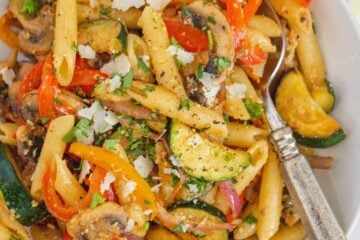
If you thought you loved pasta, wait until you try it homemade. This Pasta Dough Recipe makes fresh pasta with a tender, satisfying bite and texture that you just can’t get from a box. It’s made with just 2 ingredients and can be rolled into everything from fettuccine and pappardelle to ravioli, lasagna noodles, and more.

This post may contain affiliate links. Read my disclosure policy.
On our trip to Italy, my family took a pasta-making class where an Italian chef taught us how to make fresh pasta dough from scratch. I brought those techniques home with me and this recipe quickly became a family favorite. My kids request it all the time, and I love how something made with just 2 ingredients can taste so special.
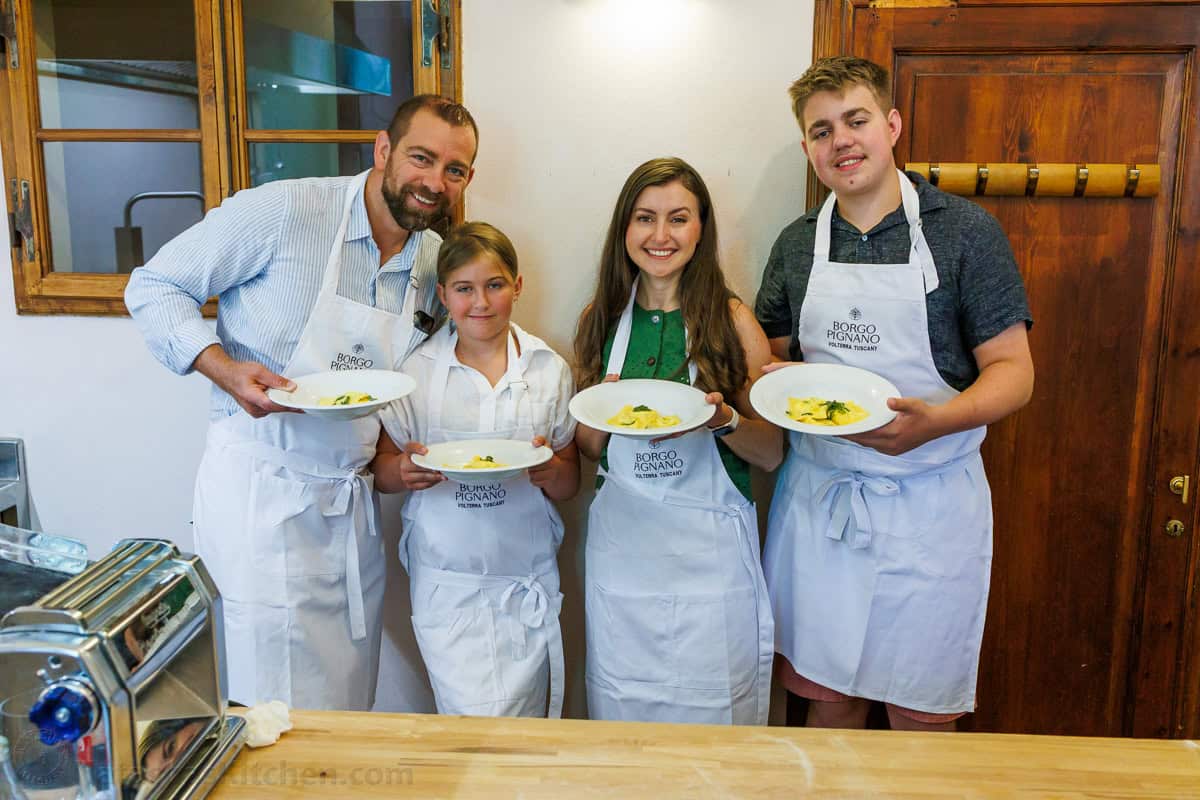
Homemade Pasta Video
Watch my video tutorial to see exactly how to make homemade pasta dough from scratch, from mixing and kneading the dough to rolling and cutting it. After my trip to Italy, I’ve adopted the Italian method – a simple 2-ingredient* dough made with just flour and eggs that can be shaped into fettuccine, linguine, lasagna noodles, ravioli, and more.
Why Make Homemade Pasta?
Fresh homemade pasta is easier than you might think, especially if you have a pasta maker to do the rolling and cutting. The biggest difference is the texture – fresh pasta is tender and silky with a satisfying bite that makes even a simple pasta sauce feel special.
If you don’t have a pasta maker, I also included instructions below for rolling and cutting the dough by hand with a rolling pin and knife.
Pasta Dough Ingredients
Homemade pasta only has a few ingredients, so quality matters.
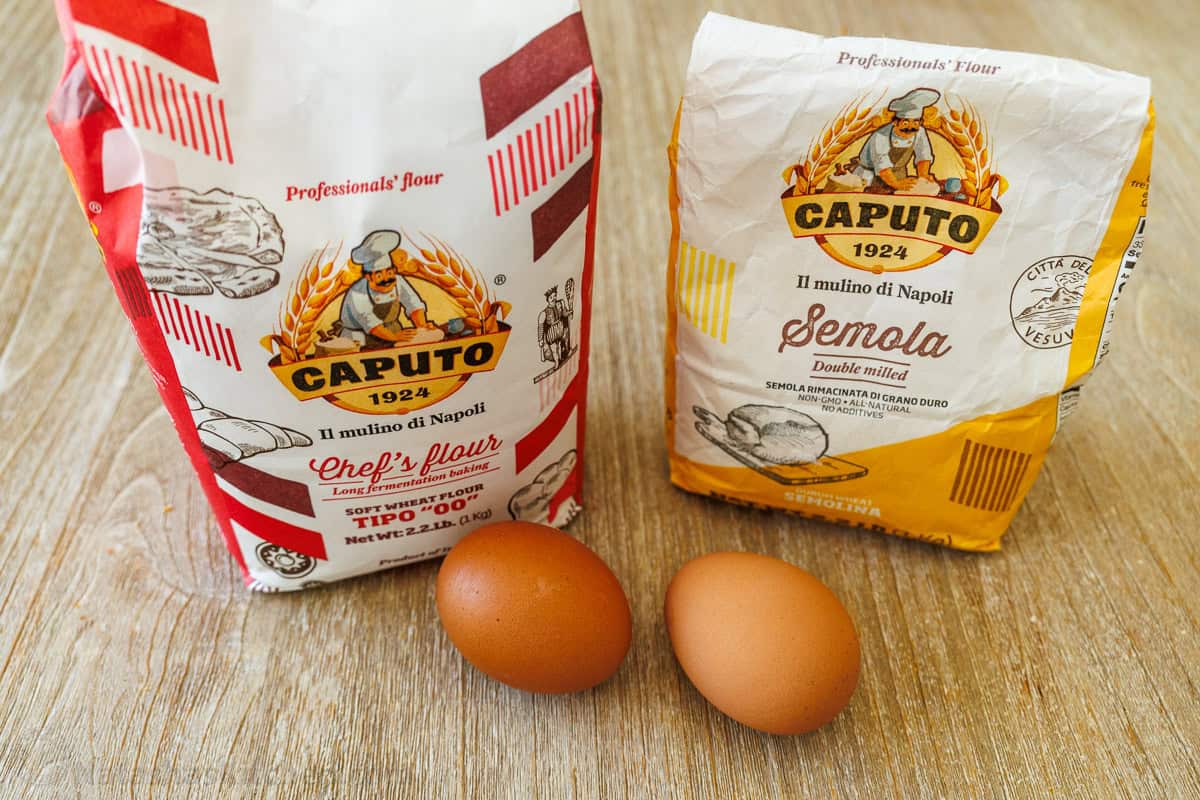
- “00” Flour – I use traditional Italian-style flour to create the silkiest texture, but you can substitute all-purpose. See our breakdown of flours below. Whatever you choose, be sure to measure correctly.
- Eggs – eggs add color, strength, and elasticity to the dough. Eggs make it easy for the dough to stay together while cooking and eating.
- Semolina flour – used for dusting to keep the pasta strands from sticking
What is the best flour for homemade pasta?
- “00” Flour – Italian fine flour made from soft durum wheat to create a silky dough. It can be a bit expensive, but it is the most traditional for making pasta. I’ve tried Caputo “00” pasta flour, Caputo “00” chef’s flour and Molino Grassi “00” flour (slightly softer dough) with great results.
- All-purpose flour – easy to work with and creates a softer dough.
- Semolina flour – I use this to dust the noodles to keep them from sticking together once they are cut. You can also use more “00” flour for dusting if you prefer.
How to Make Homemade Pasta Dough
After taking the pasta class in Italy, I’ve been making my dough directly on the counter by making a well in the center and adding the eggs. You can also do this in a bowl with a fork and your hands. Watch my quick video for making authentic Italian Pasta Dough.
- Prep – Set your pasta machine to the widest setting. Use semolina flour to sprinkle a large baking sheet and set aside.
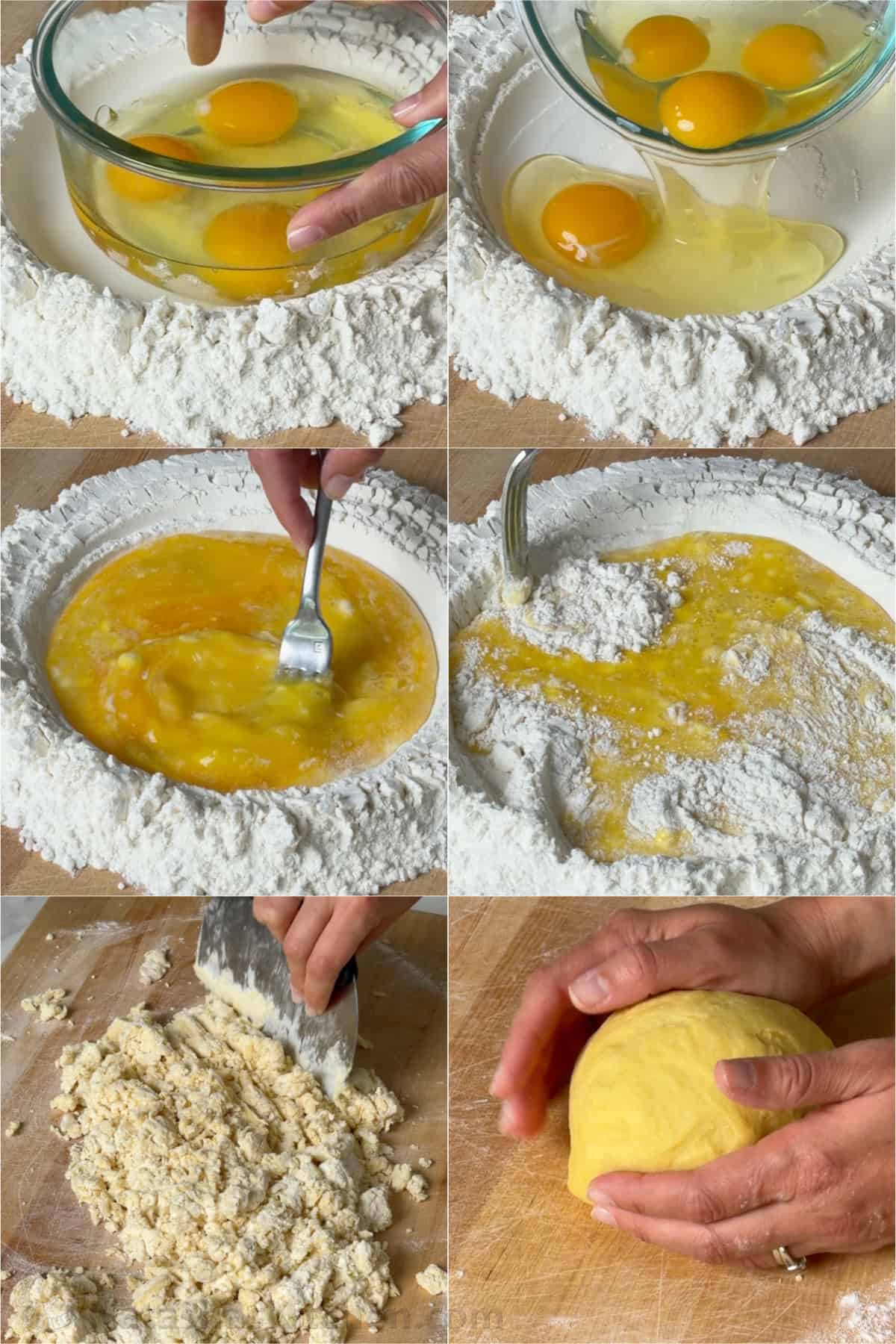
- Make the dough: Pour your flour into a mound onto your work surface. Make a well in the center with the bottom of a bowl and crack the eggs into the well. Use a fork to beat the eggs lightly, then gradually blend them into the flour, working from the edges outwards to incorporate the flour, and mix until most of the flour is incorporated.
- Knead the dough – Use a bench scraper to scrape the counter and cut the remaining flour into the dough until the mixture resembles scrambled eggs. Then use your hands to pull the dough together and knead for about 5 minutes, until smooth. To knead, use the heel of your hand to push the dough down, then away from you. Turn the dough and press down again. Dust with flour if it’s too sticky to knead.
- Rest the dough – shape the dough into a disk and wrap in plastic wrap. Rest on the counter for 20 minutes or up to an hour. Resting relaxes the gluten, making it easier to roll.
How to Roll and Cut Pasta Dough
- Cut the dough into 4 pieces. I like to use a bench scraper. Remove one slice and keep the remaining pieces covered.
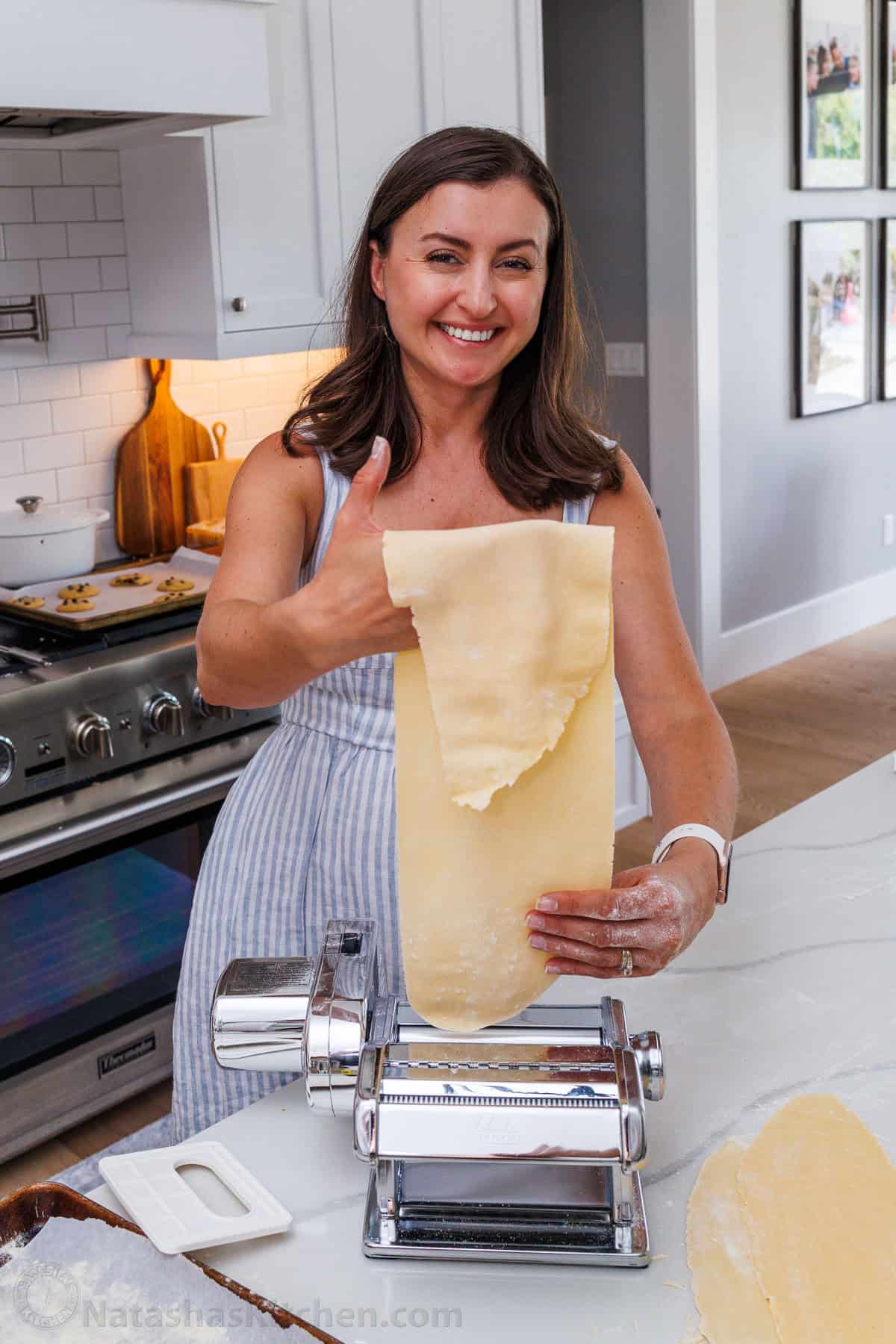
- Shape and flatten the piece into a rectangle so it will fit into the pasta dough roller on the widest setting. Dust the dough generously with flour and feed it into the KitchenAid dough roller, a free-standing dough roller (my favorite), or hand-crank at an even pace, catching it as it comes through. After the first pass, fold the dough into thirds like a letter. Feed the folded pasta dough through on the widest setting a second time then fold the dough once more and roll it through the widest setting.
- Adjust the setting from the widest to the next setting, a step narrower. Pass the dough through the roller once on each setting until you reach your desired thickness. For most pasta shapes, the dough should be slightly transparent when you put your fingers under it. Keep the dough sheet generously dusted with flour to prevent sticking. If the sheet gets too long, cut it into manageable lengths.
- Cut the pasta – Once you’ve reached your desired thickness, generously dust the sheet with flour and change to the pasta cutter attachment. Pass through the pasta cutter, catching the dough as it exits. Lay the noodles out on the semolina-dusted baking sheet and dust with more semolina (or use a pasta drying rack). Cover with a clean towel and dry for 20 minutes before cooking the pasta or freezing the dough (see freezing directions below).

What is the best pasta maker?
- KitchenAid attachment – A stand mixer pasta roller takes up less space when not in use, and it keeps your hands free so you don’t have to hand-crank it.
- Countertop Pasta Maker – A hand-cranked Marcato 150 Pasta Maker or an Electric Marcato Pasta Maker (my favorite) are traditional pasta dough makers if you don’t have a stand mixer.
How to Make Pasta Without a Machine
If you don’t have a pasta machine, you can roll it out by hand, although it is quite a bit more effort. You’ll need a rolling pin and knife or pizza cutter. Roll the piece of dough to form a rectangle. Fold it once into a letter, and roll it out again slightly, then fold it a second time. Now roll the dough out uniformly and thinly to about the thickness of a dime. Cut fettuccine-type pasta by rolling or folding the flour-dusted dough like you would a burrito. Then cut the rolled dough into thin slices.
Make-Ahead and Storage
Homemade pasta dough is great for making ahead. Here’s how to store it before or after rolling and shaping it:
- Refrigerate: Wrap the pasta dough tightly in plastic wrap and refrigerate for up to 2 days. Let it sit at room temperature for 20-30 minutes before rolling so it’s easier to work with.
- To Freeze Shaped Pasta – Once the pasta is cut and shaped, arrange in a single layer or loose nests on a flour- or semolina-dusted baking sheet. Freeze until firm, then transfer to a freezer zip-top bag. Cook straight from frozen without thawing.

Can I dry egg pasta dough for storage?
Because it has raw eggs in it, it’s best to store homemade pasta in the freezer and it does freeze well. Freezing homemade pasta is also considered safer and more effective for preserving the quality and taste of the pasta.

How to Cook Homemade Pasta
Bring a large pot of salted water to a boil. Drop your cut pasta dough into the boiling water and cook until you reach your desired tenderness. Homemade pasta cooks faster and takes just 2-4 minutes, depending on how thick you cut the pasta.
To Cook from Frozen: do not thaw and cook directly from frozen to prevent sticking. Frozen pasta can take an extra 2 minutes to cook and get rid of any eggy taste.

This foolproof homemade pasta recipe makes it easy to make delicious pasta dishes from scratch. The pasta has a delicate yet chewy texture you’ll crave. You’ll never want store-bought dried pasta again!
Homemade Pasta
Ingredients
- 2 3/4 cups Italian-style “00” flour, or all-purpose flour, measured correctly,* plus more as needed
- 4 large eggs
- Semolina flour, for dusting the baking sheet and cut noodles
Instructions
- Prep – dust a large baking sheet with semolina flour. Secure your pasta roller and set it to the widest rolling setting.
- To make the pasta dough – Mound your flour on your work surface, make a well in the center with the bottom of a bowl, and crack your eggs into the well. Use a fork to blend the eggs into the flour. Start stirring the flour from the sides of the well, working outwards until incorporated. Use a bench scraper to scrape the surface and cut the remaining flour into the dough until it resembles scrambled eggs. Knead the dough over a lightly floured surface for 5 minutes or until smooth and flexible, but not sticky, dusting with flour if it's too sticky to knead. Shape into a ball and flatten into a disk. Cover the dough with plastic wrap and let it rest at room temperature for 20 minutes or up to an hour.
- Divide and roll the dough – Use a bench scraper to cut the dough into 4 equal pieces. Keep the extra dough covered with plastic wrap as you work with one piece at a time. Flatten the piece of dough into a rectangle to fit the dough roller and dust the dough with flour to prevent sticking then roll it through on the widest setting on your pasta maker, catching it as it comes through then trifold the dough like a letter. Put it through the widest setting again then fold the dough once more and roll it through the widest setting.
- Continue rolling the pasta through the machine without folding, adjusting the rollers to a smaller setting with each pass-through until the desired thickness is reached (I stop at the setting before the last one for fettuccini). Keep the dough dusted with flour to prevent sticking. If the sheet becomes too long to manage, cut it into manageable lengths and continue rolling.
- To Cut the Pasta Dough – Dust the final sheet with flour to ensure clean cuts that don’t stick to each other and switch to your desired pasta cutter attachment. Catch the pasta as it comes through the cutter and arrange it on your prepared baking sheet, dusting it with more semolina flour. Cover with a clean kitchen towel and let dry 20 minutes before cooking or freezing (see make-ahead tips).
- To cook the homemade pasta – salt a large pot of water and bring it to a boil. Add the dried pasta dough (or frozen dough), stirring gently at first to be sure the noodles don't stick. Homemade pasta dough cooks much faster than store-bought dough, so check the noodles for doneness between 2-4 minutes. If undercooked, the noodles will taste a bit eggy. Add 2 minutes if cooking from frozen. Drain the pasta.
Notes
- Make Ahead: You can refrigerate dough tightly covered in plastic wrap for up to 2 days. To freeze formed pasta: Sprinkle with a little more semolina on top, then twirl pasta into little nests. Transfer the baking sheet to the freezer uncovered and freeze for 1 hour until firm then transfer to a freezer-safe zip bag and freeze for up to 2 months. Cook directly from frozen.
- Pasta Machines: We use our stand mixer with a KitchenAid attachment. You can also use a free-standing electric pasta maker (my favorite), or hand-cranked pasta machine.
- To Roll Pasta dough by hand: Lightly roll the dough out and fold like a letter twice then roll to an even thickness, similar to a dime. Fold or roll the dough like you would a cake roll or burrito, and cut thin slices to your desired width. Unfold and lay long noodles onto the prepared baking pan.
Nutrition Per Serving
Serve Homemade Pasta With
Toss the cooked pasta with these warmed sauces or use homemade pasta in any dish that calls for pasta.
- Cheesy buttered pasta – toss with butter, parmesan cheese, and reserved pasta water.
- Pesto– toss until coated
- Marinara – coats the noodles beautifully
- Alfredo Sauce – you’ll find the best recipe in my Cookbook
- Bolognese Sauce – for beefy and saucy noodles
More Pasta Recipes
Creamy Cajun Chicken Pasta

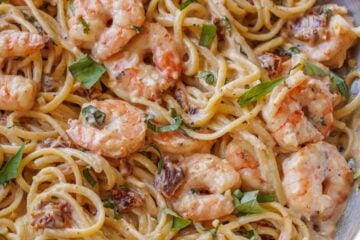
Tuscan Shrimp Pasta Recipe (VIDEO)
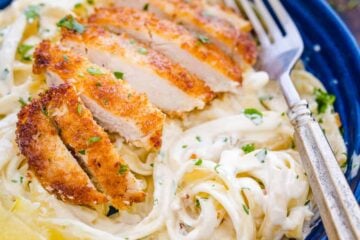
Creamy Lemon Chicken Pasta
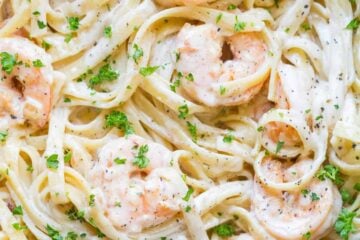
Creamy Shrimp Pasta Recipe (VIDEO)