

Thick, creamy, and perfectly spreadable – Homemade Mayonnaise is incredibly easy and inexpensive to make, and this one tastes like my favorite real mayonnaise from the grocery store. This can be used in any recipe that calls for mayonnaise.
There’s a secret ingredient here that makes all the difference, and you’ll be surprised at how close it is to a store-bought mayo. Actually, my kids love this one even more, which makes me happy because it has good-quality ingredients!

This post may contain affiliate links. Read my disclosure policy.
I love making homemade alternatives for store-bought items. They are usually less expensive, have better ingredients, and taste better! We make our own sauces like easy Homemade Ranch, BBQ Sauce and fresh Pesto. If you enjoy DIY alternatives for your grocery store favorites, you’ll love this better than store-bought mayonnaise.
Mayonnaise Video
Watch me whip up homemade mayonnaise—you’ll be amazed at how simple and delicious it is! It literally takes less than a minute.
Homemade Mayonnaise Recipe
This homemade mayo recipe is the closest I’ve come to replicating my favorite store-bought mayo, and you can use this homemade version in any recipe that calls for mayonnaise. I think my Caesar Dressing tastes even better using homemade mayo.
I won’t admit how much mayonnaise I tasted while perfecting this recipe. Let’s just say it got a little ridiculous with the number of spoons I went through that day! At least it was homemade mayo—ha! There did come a point when my husband had to cut me off because I kept handing him spoonfuls to taste. By the next day, he flat-out refused to try it again. I might have gone overboard, but hey, it was all for the greater good.
Ingredients for Homemade Mayonnaise
- Egg – The egg yolk acts as an emulsifier to create the creamy, smooth consistency of mayonnaise. Without it, the oil and liquid would separate.
- Dijon mustard – contributes a subtle tanginess while also helping the emulsion stay together.
- White vinegar – provides acidity and enhances the overall flavor.
- Lemon juice – freshly squeezed to add brightness and more acidity for a fresh, zesty taste.
- Salt – enhances the natural flavors of each ingredient.
- Extra light olive oil – or other neutral oil (e.g., canola, avocado oil, sunflower). Avoid extra-virgin olive oil, as the flavor is stronger.
- Sugar – (optional, but highly recommended) – for a hint of sweetness and makes it taste more like the store-bought versions. I’m convinced it’s the secret ingredient to make it taste more like the popular mayonnaise brands such as Hellmans or Best Foods.

Variations and Substitutions
- Vinegar – try white wine vinegar or substitute it with lemon juice to taste. Both will give you a slightly different flavor profile.
- Seasonings – Experiment with smoked paprika, sriracha, or fresh herbs to create your own flavored mayonnaise.
- Garlic and Lemon Juice – add minced garlic and lemon juice for an aioli sauce to dip Fried Zucchini or Shrimp Cakes.
- Ketchup – combining equal parts mayo and ketchup creates a fry sauce like we did in our Hamburger recipe.
How to Make Mayonnaise
- Combine Base Ingredients – Into a tall container or mason jar, add the egg, Dijon mustard, vinegar, lemon juice, and salt.
- Add Oil – Pour the oil over the top of the ingredients and let it rest for 15 seconds so the ingredients can settle.
- Blend – Insert the immersion blender into the container, touching the bottom. Start blending without moving the blender for about 10 seconds until the mixture begins to emulsify. Slowly lift and tilt the blender to incorporate the rest of the oil. Continue blending until thick and creamy. It literally takes a minute to blend.
Pro Tip:
Immersion blenders are nearly foolproof for making mayonnaise as long as you use a jar or container that is about the width of your blender. This method combines the mayo quickly and effortlessly without drizzling in the oil slowly, and ensures perfect results every time.
Don’t have an immersion blender? You can use a food processor. The steps are a little different so see the notes in the recipe card below.

- Adjust Seasoning – Taste the mayonnaise. Add more lemon juice, sugar or salt to balance flavors, if desired.
- Store – Transfer the mayonnaise to a clean, airtight container. Refrigerate and use within 1 week.
Tips for the Best Homemade Mayo
- Choose the Right Oil: Use a mild, neutral oil such as extra light olive oil without strong flavors that can overpower the mayonnaise.
- Use the Proper Tool: I recommend using an immersion blender for the best results, but if you don’t have one a small food processor or whisk will also work. Slowly drizzle the oil in so the mayo doesn’t break in consistency.
- To Fix Broken Mayonnaise: If your mayo does break and looks separated or runny, don’t panic! Place a new egg yolk into the container and process until it comes back together.
- A Note on Raw Eggs: Raw eggs are a common ingredient in homemade dressings, Hollandaise, Swiss Meringue, and Chocolate Mousse, but if you are concerned about using raw eggs, buy pasteurized eggs or you can easily pasteurizing eggs at home.

Storage
Since homemade mayonnaise doesn’t contain preservatives like the grocery store versions, it’s best to make small batches that can be used quickly. This recipe yields about 1 cup and should be stored in the refrigerator in an airtight container for up to one week.

The convenience of creating delicious food with ingredients I already have on hand is something that always makes me smile. I hope you will love this homemade mayonnaise swap in your home as much as we do.
More Recipes with Mayonnaise
If you’re obsessed with mayonnaise, don’t miss our collection of recipes where Mayonnaise takes center stage!
- Egg Salad
- Tartar Sauce
- Chicken Salad
- Smashed Potato Salad
- Macaroni Salad
- Classic Tuna Salad
- Fish Taco Sauce
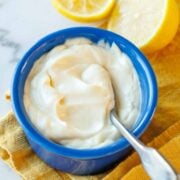
Easy Homemade Mayonnaise

Ingredients
- 1 large egg
- 1 Tbsp Dijon mustard
- 1 Tbsp white vinegar
- 1/2 Tbsp lemon juice, plus more to taste
- ¼-½ tsp fine sea salt, or added to taste
- ½ tsp sugar, optional
- 1 cup extra light olive oil, or other neutral oil (e.g., canola, avocado, or sunflower oil)
Instructions
- Combine Ingredients: In a tall container, such as a mason jar, add the egg, Dijon mustard, vinegar, lemon juice, and salt.
- Pour the oil over the top of the ingredients and let it rest for 15 seconds so the ingredients can settle.
- Insert the immersion blender into the container, touching the bottom. Start blending without moving the blender for about 10 seconds until the mixture begins to emulsify. Slowly lift and tilt the blender to incorporate the rest of the oil. Continue blending until thick and creamy.
- Taste the mayonnaise. Add more lemon juice, sugar, or salt to balance the flavors, if desired. Transfer the mayonnaise to a clean, airtight container. Refrigerate and use within 1 week.
Notes
- In the small bowl of a food processor, add the egg, Dijon, vinegar, lemon juice, salt, and sugar, and process for 15 seconds.
- With the food processor running, slowly add the oil, just a small drizzle at a time, until about 1/4 of the oil is added. This step is important for the emulsification process to work properly so the mayo doesn’t break.
- Gradually increase the oil stream until the mayonnaise is fully thickened. Taste and adjust the seasoning with lemon juice, salt, and sugar if needed.