

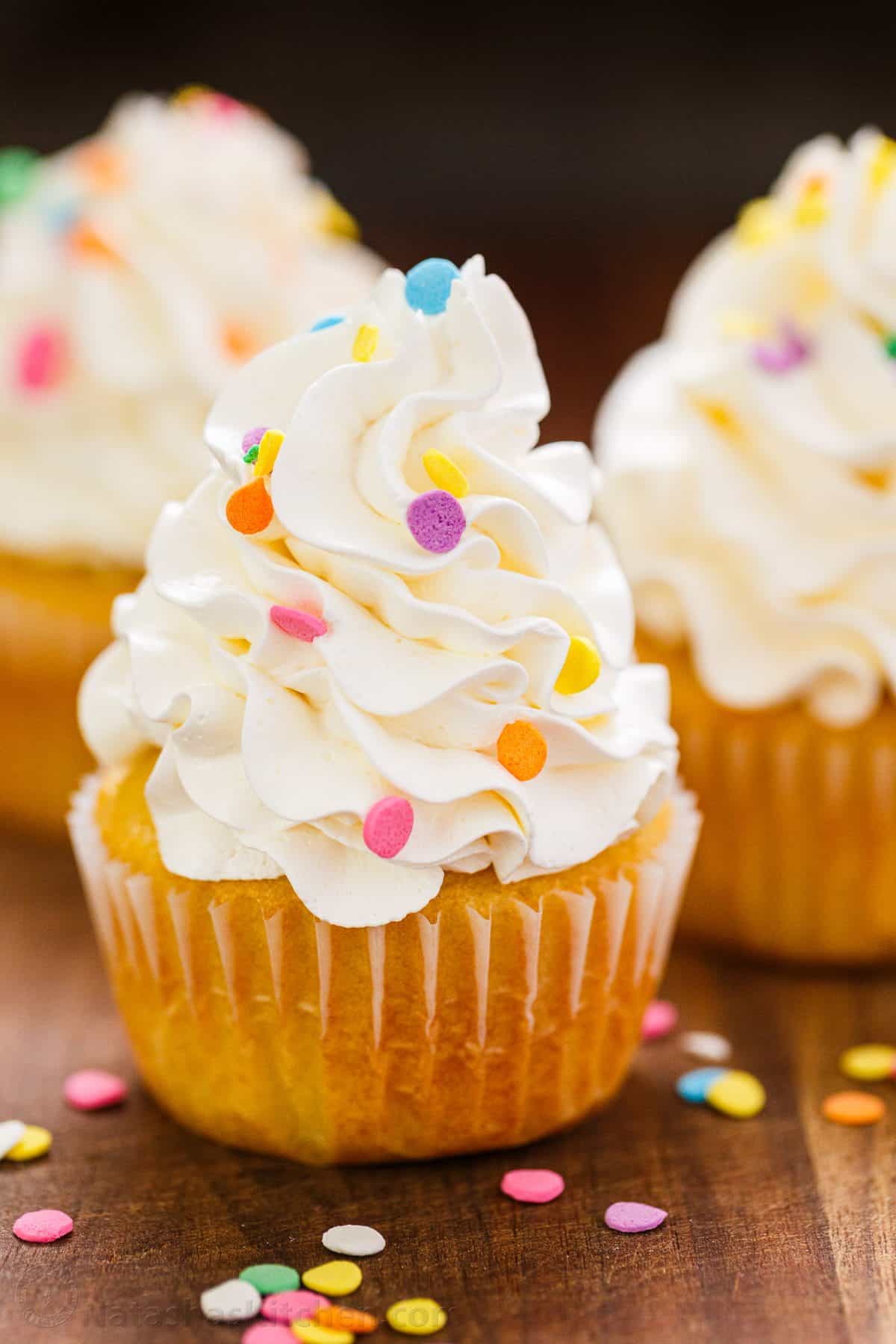
This Swiss Meringue Buttercream is my favorite frosting for cakes and cupcakes. It’s silky, pipes beautifully, holds its shape, and isn’t overly sweet. Heating the egg whites and sugar to 160°F makes it smooth and pasteurizes the whites. And if yours looks soupy or curdled halfway through, don’t panic. It happens, and I’ll show you how to fix it.
This post may contain affiliate links. Read my disclosure policy.
Helpful Reader Review
“This has been my go to recipe for SMBC for the last 6 years! Thank you for sharing your recipe!“ – Anne ★★★★★
Swiss Meringue Buttercream Video
It really helps to see what each stage looks like, so watch my quick video before you start.
Swiss Meringue Buttercream Recipe
Swiss Meringue Buttercream (SMBC) is the meringue frosting I make most. It isn’t nearly as sweet as American Buttercream and isn’t complicated. This frosting makes me think of wedding cakes every time I make it. It keeps well overnight at room temperature without drying out or forming a crust, so you can assemble a cake a day ahead without taking up fridge space (in a warm kitchen, refrigerate it instead).
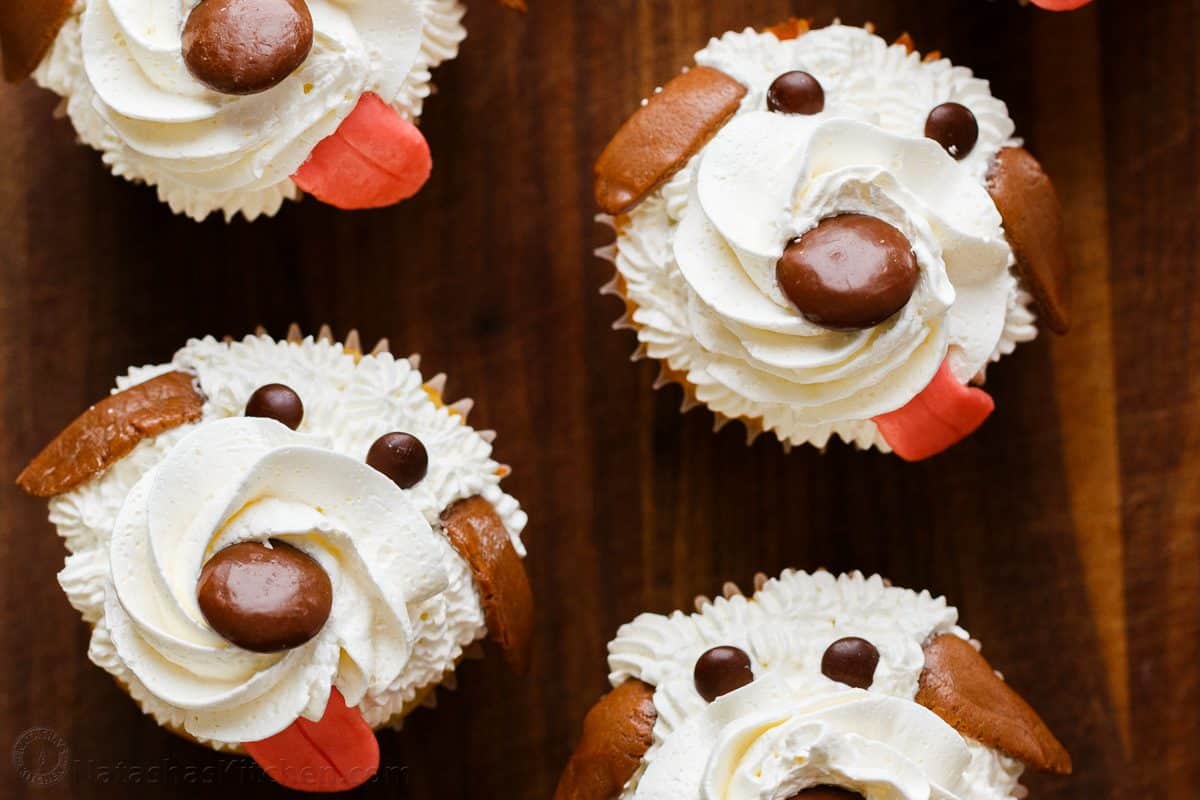
I used it to make puppy cupcakes for my niece and nephew’s birthday party, and the kids loved them! I also pipe it over my Vanilla Cupcakes or Chocolate Cupcakes, and it gives my Chocolate Cake with SMBC that classic tuxedo look.
Ingredients for Swiss Meringue Buttercream
- Egg whites – from 7 large eggs. Any trace of yolk or grease keeps the meringue from whipping. Save the yolks for my Easy Hollandaise Sauce or Crème Brûlée.
- Granulated sugar – it dissolves completely over the water bath, so the frosting isn’t grainy. Avoid coarse sugar.
- Unsalted butter – softened about 1 hour so it’s still slightly cool to the touch. Butter that’s too warm makes soupy frosting; if it gets too soft, refrigerate it for 10 minutes at a time. For whiter frosting, choose a light-colored butter.
- Vanilla and salt – pure vanilla extract for flavor, and a pinch of salt keeps it from tasting flat.
How to Make Swiss Meringue Buttercream
- Prepare the double boiler – bring at least 1 inch of water to a simmer in a large saucepan.
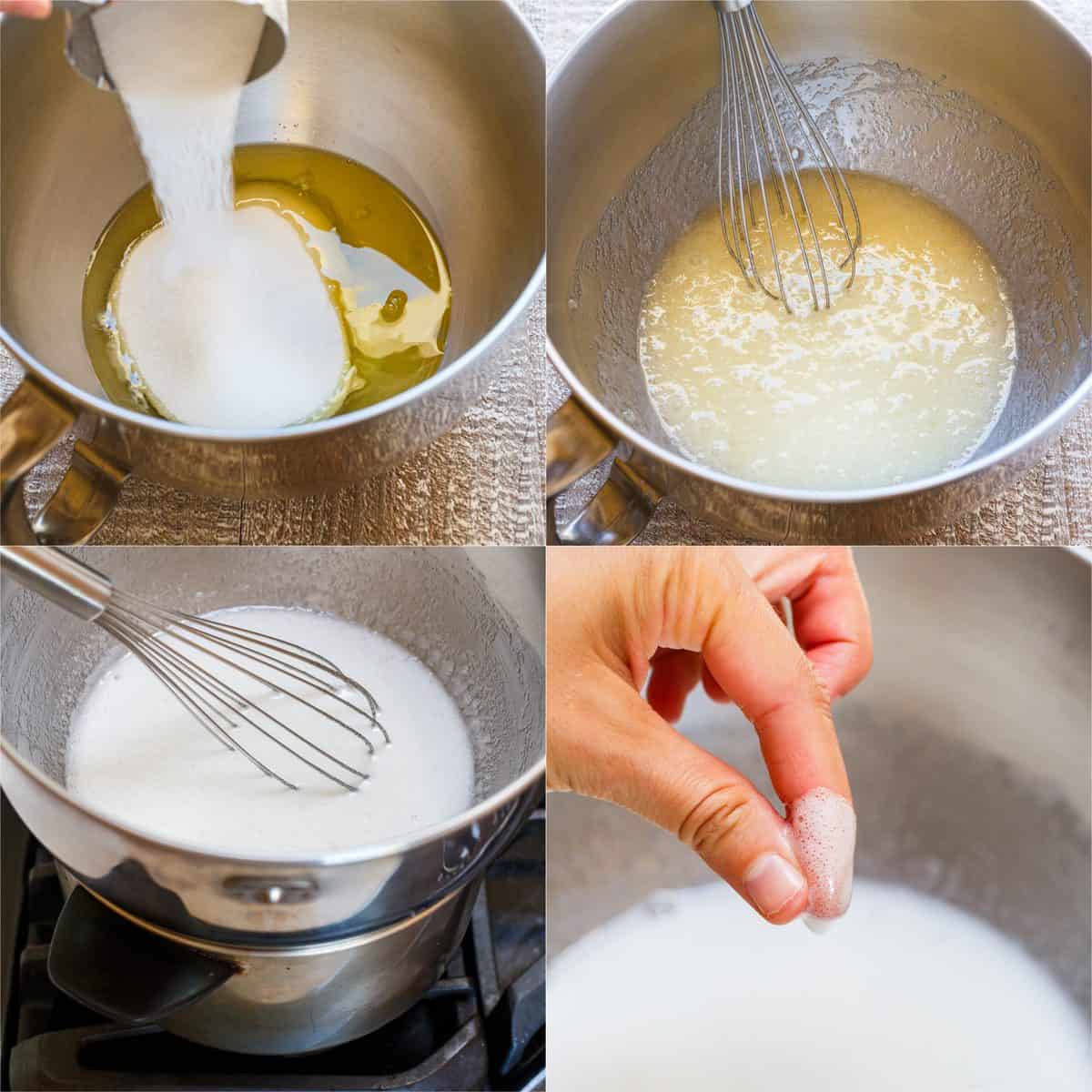
- Heat the egg whites and sugar – in the spotless bowl of your stand mixer, whisk the egg whites and sugar. Set the bowl over the barely simmering water (over the steam, not touching it) and whisk constantly until the mixture reaches 160°F, about 3 minutes. Rub a little between your fingers; you shouldn’t feel any sugar granules.
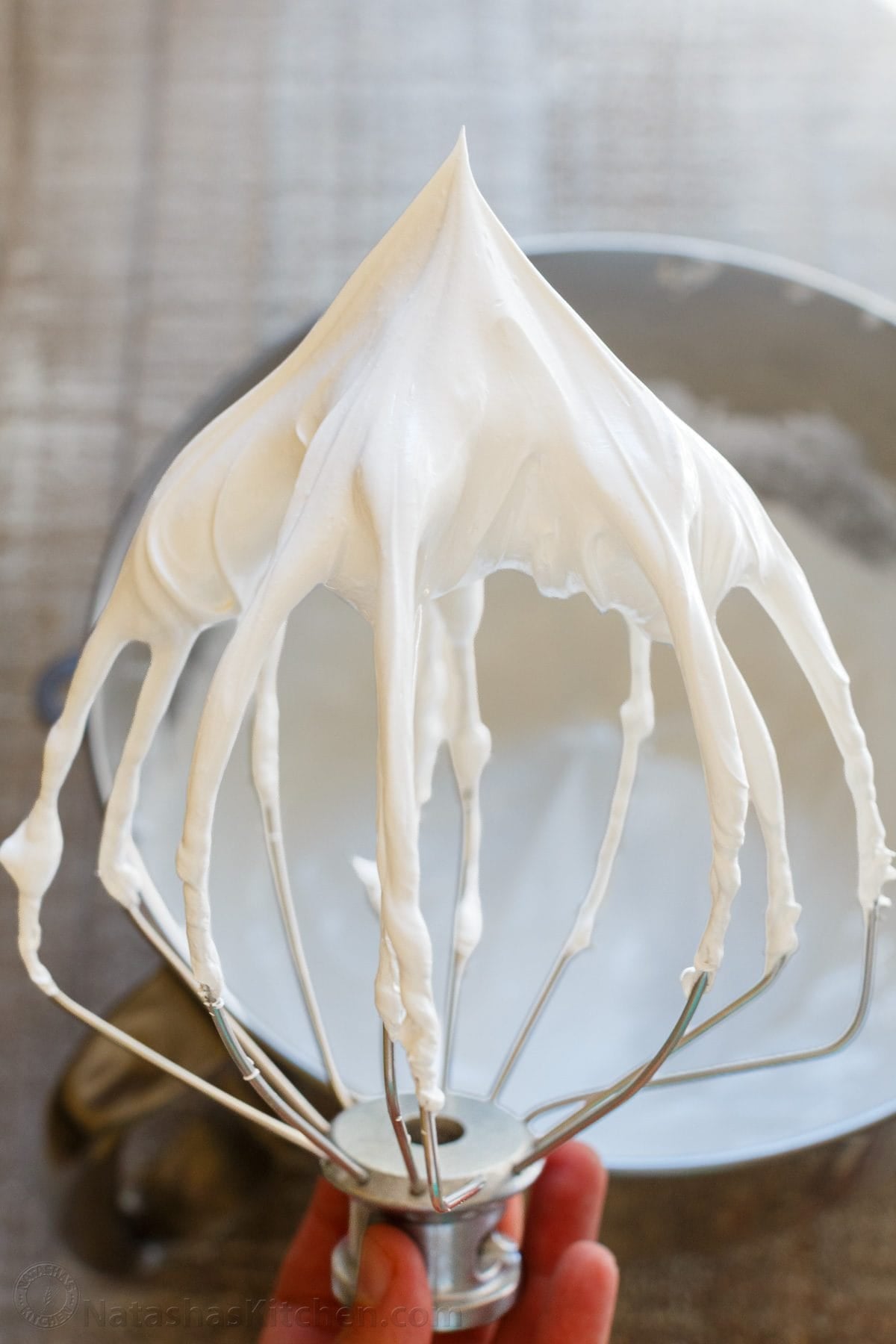
- Beat – with the whisk attachment, beat on medium-high until stiff, glossy peaks form and the bottom of the bowl feels completely room temperature, 15-20 minutes.
Natasha’s Pro Tip:
If you remember just one thing, make it this: don’t add butter to warm meringue. That’s what makes it soupy almost every time. Wait until the bowl feels cool to the touch, and use butter that’s soft but still cool.
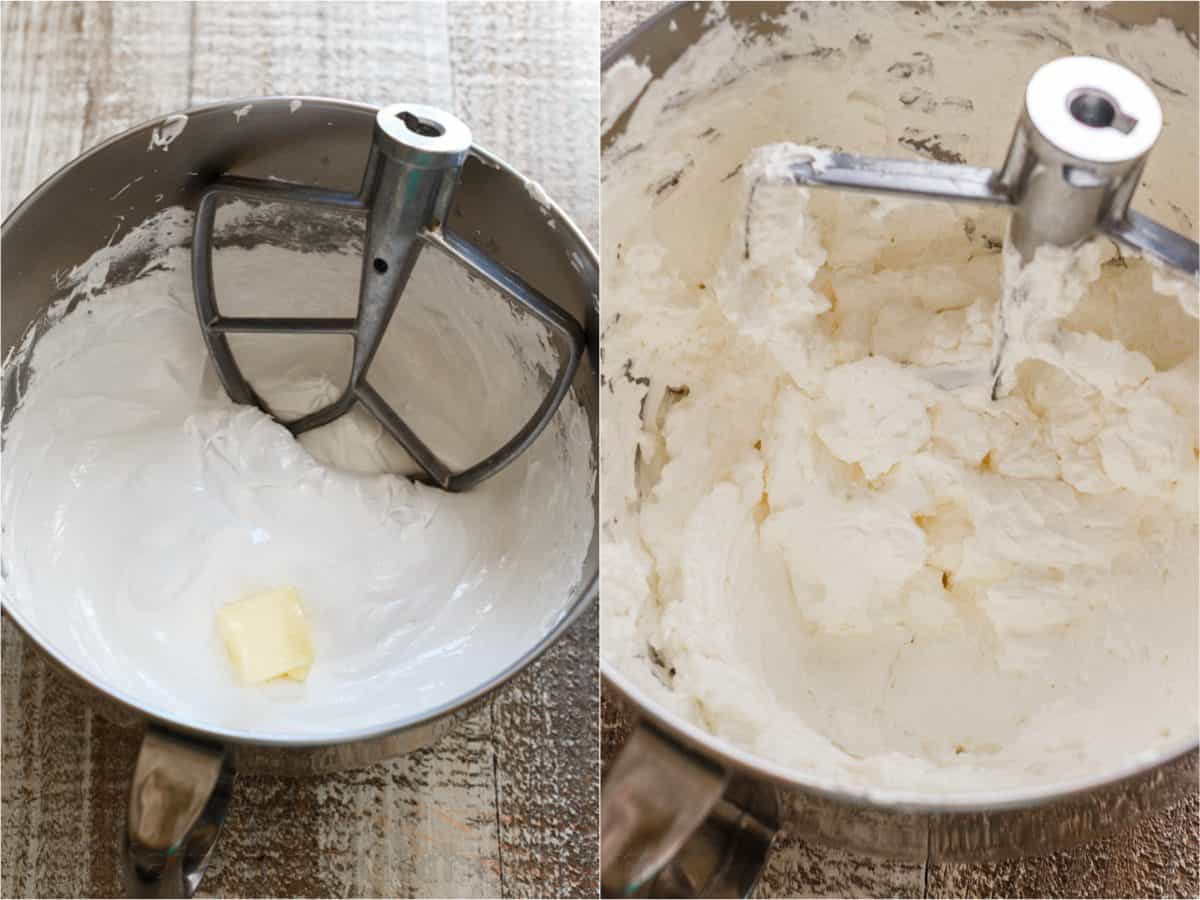
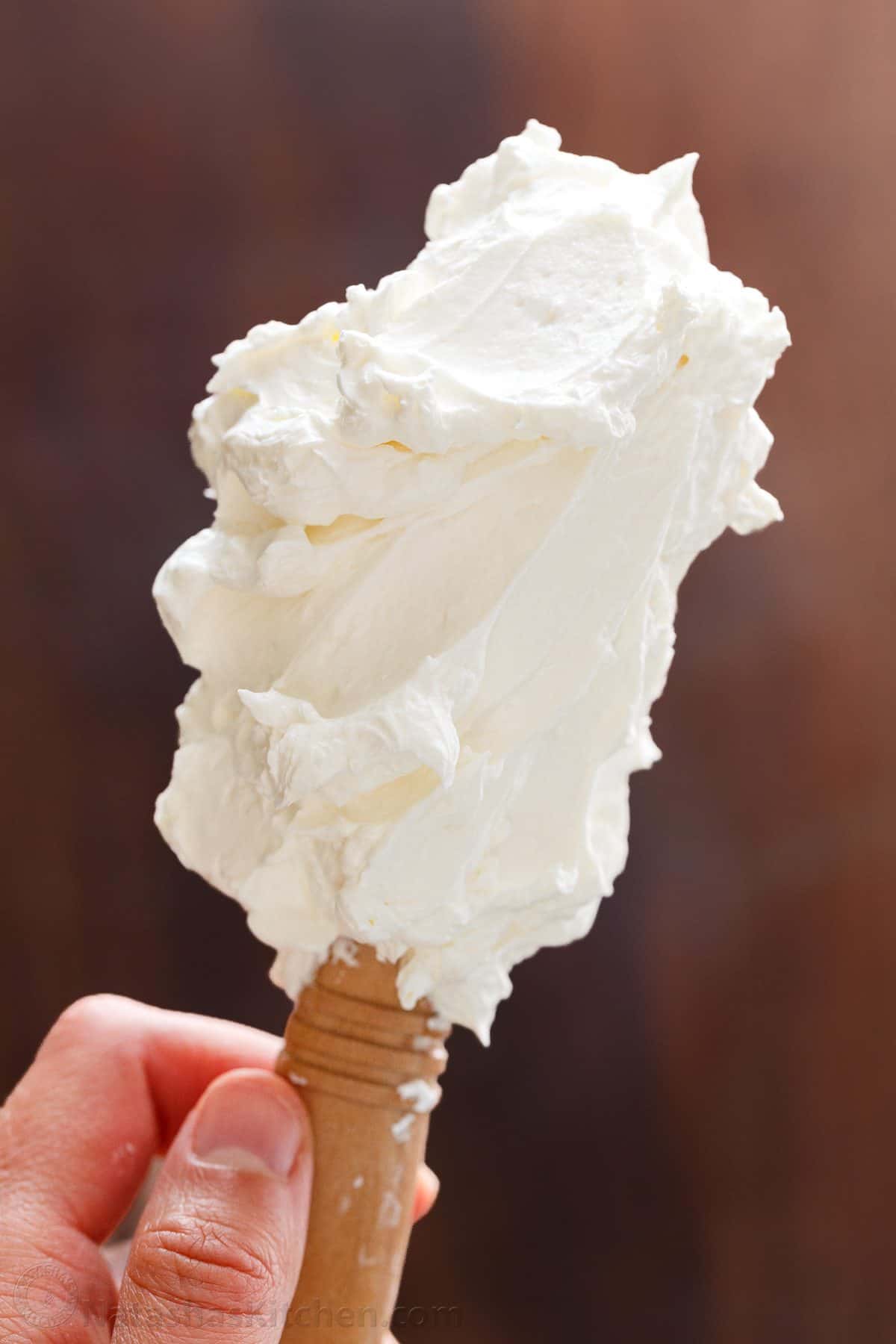
- Add butter – switch to the paddle, reduce to medium and add butter 1 Tbsp at a time, as fast as it’s absorbed. Scrape the bowl, then beat on medium-high about 3 minutes. If it looks lumpy or liquidy, keep beating until it’s thick and smooth.
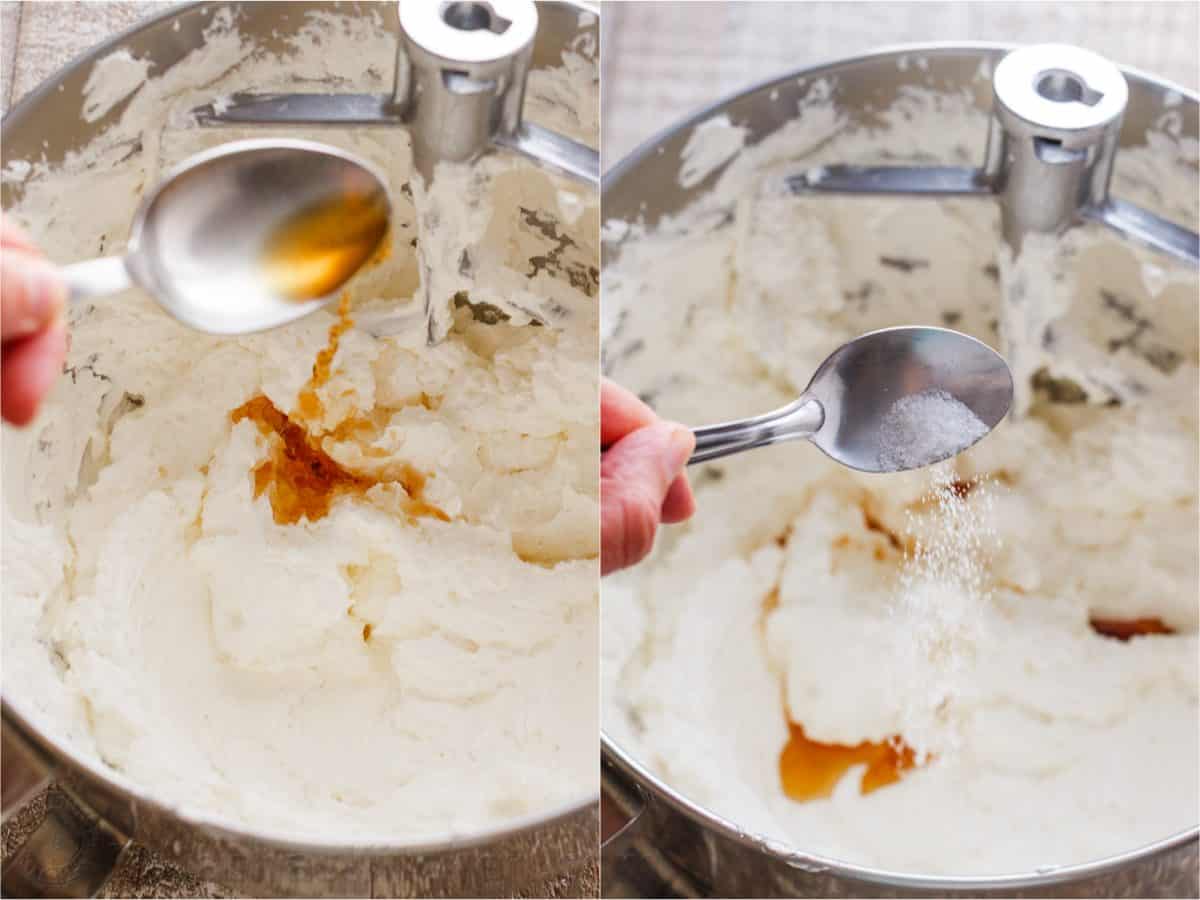
- Finish – mix in the vanilla and salt for about 1 minute. Use right away or store.
Can I Use Carton Egg Whites?
Pasteurized liquid egg whites can work if the carton says 100% egg whites with no added ingredients; gums or stabilizers can keep them from whipping. Seven large whites equal about 7 oz (a scant 1 cup). Pasteurized whites whip more slowly and won’t get quite as tall as fresh whites, so expect a longer whipping time (a pinch of cream of tartar can help stabilize them). For the best results, I stick with fresh egg whites. Heat them with the sugar to 160°F, just like fresh whites.
Color and Flavor Variations
- Coloring – use gel food coloring. It adds almost no liquid, so the frosting stays smooth.
- Chocolate – once the frosting is smooth, beat in melted chocolate that has cooled to room temperature. For a classic version, see my Chocolate Buttercream Frosting.
- Other flavors – swap some of the vanilla for almond, lemon, or coconut extract (start with a little and taste), or beat in finely ground freeze-dried strawberries or raspberries.
Tips for the Best Swiss Meringue Buttercream
- Use a thermometer – 160°F is the target for smooth, pasteurized whites.
- Use a stainless steel bowl – glass holds heat, so the meringue takes longer to cool.
- Stand mixer is best – a high-speed electric hand mixer works but takes 5-10 minutes longer.
- Don’t rush the cooling – the bottom of the bowl should feel room temperature, not warm, before any butter goes in.
How to Fix Soupy or Curdled Swiss Meringue Buttercream
- Soupy or runny – the meringue or butter was too warm. Refrigerate the bowl for 15-20 minutes, then beat again.
- Curdled or lumpy – this is normal partway through adding the butter. Don’t give up if it curdles. Keep beating! If it won’t come together, it’s too cold; gently warm the outside of the bowl while beating.
- Grainy – the sugar didn’t fully dissolve. Next time, heat the mixture to 160°F and check it between your fingers.
- Meringue won’t reach stiff peaks – the bowl or whisk had grease, yolk, or water on it. Start with spotless, dry tools.
- Tastes too buttery – keep whipping; it gets lighter and silkier the longer it goes. Good vanilla helps too.

How Much Frosting Does This Make?
This recipe makes about 5 cups, enough for about 24 cupcakes, a 9-inch 2-layer cake, or a single-layer 9×13 cake. For a 3-layer or larger cake, make a little extra.
Make-Ahead and Storage
- Make-ahead – frost cupcakes or a cake the night before and keep them covered in a cool room, or refrigerate if your kitchen is warm. Let chilled ones sit at room temperature about 1 hour before serving.
- Room temperature – since the egg whites are heated to 160°F, frosted cupcakes or cake keep covered for 1 to 2 days in a cool, low-humidity room. In a warm or humid kitchen, refrigerate it instead. Just keep it out of the heat and sun. It’s still butter, and it will melt!
- Refrigerator – airtight, up to 5 days. Bring to room temperature and re-whip before piping.
- Freezing – up to 3 months in a freezer bag with the air pressed out. Thaw in the fridge, bring to room temperature, and re-whip.
This is the frosting I reach for when I want a cake to feel extra special. I hope it becomes a favorite in your kitchen too!

Swiss Meringue Buttercream
Ingredients
- 7 oz egg whites, from 7 large egg whites
- 2 cups granulated sugar
- 1 1/2 cups unsalted butter, softened, 3 sticks*
- 2 tsp vanilla extract
- 1/4 tsp fine sea salt
Instructions
- Prepare the double boiler – In a large saucepan, add at least 1 inch of water and bring to a simmer.
- Heat the egg whites and sugar – Thoroughly wash and dry the stainless steel mixing bowl from your stand mixer (you don't want grease touching the meringue). Add 7 egg whites and 2 cups sugar and whisk together. Place the mixing bowl over a large saucepan of barely simmering water, creating a seal over the pot (the bowl should be over the steam, not touching water). Whisk constantly until mixture reaches 160˚F (takes about 3 min). Sugar should be fully dissolved (you should not feel any sugar granules when rubbing the mixture between your fingertips). The mixture will feel hot to the touch.
- Beat – Wipe water from the bottom of the mixing bowl and transfer the bowl to a stand mixer fitted with a whisk attachment. Beat on medium-high speed until stiff, glossy peaks form (about 15-20 min) and the bottom of the bowl feels completely at room temperature and not warm to the touch (important: warm meringue will melt the butter).
- Add butter – Once the bowl is at room temperature, switch to the paddle attachment, reduce to medium speed, and add butter 1 Tbsp at a time, adding it just as fast as it is absorbed by the meringue. Once all butter is in, scrape down the bowl and continue beating until it reaches a thick whipped consistency (3 min on med-high speed). If it looks lumpy or liquidy at all, keep beating until smooth, thick, and whipped.
- Finish – Add 2 tsp vanilla extract and 1/4 tsp salt and mix on med-high until incorporated (about 1 min). Serve or store.
Notes
Nutrition Per Serving
More Homemade Frosting Recipes


Cream Cheese Frosting Recipe (VIDEO)

Cupcake Frosting Recipe

Chocolate Cream Cheese Frosting
