

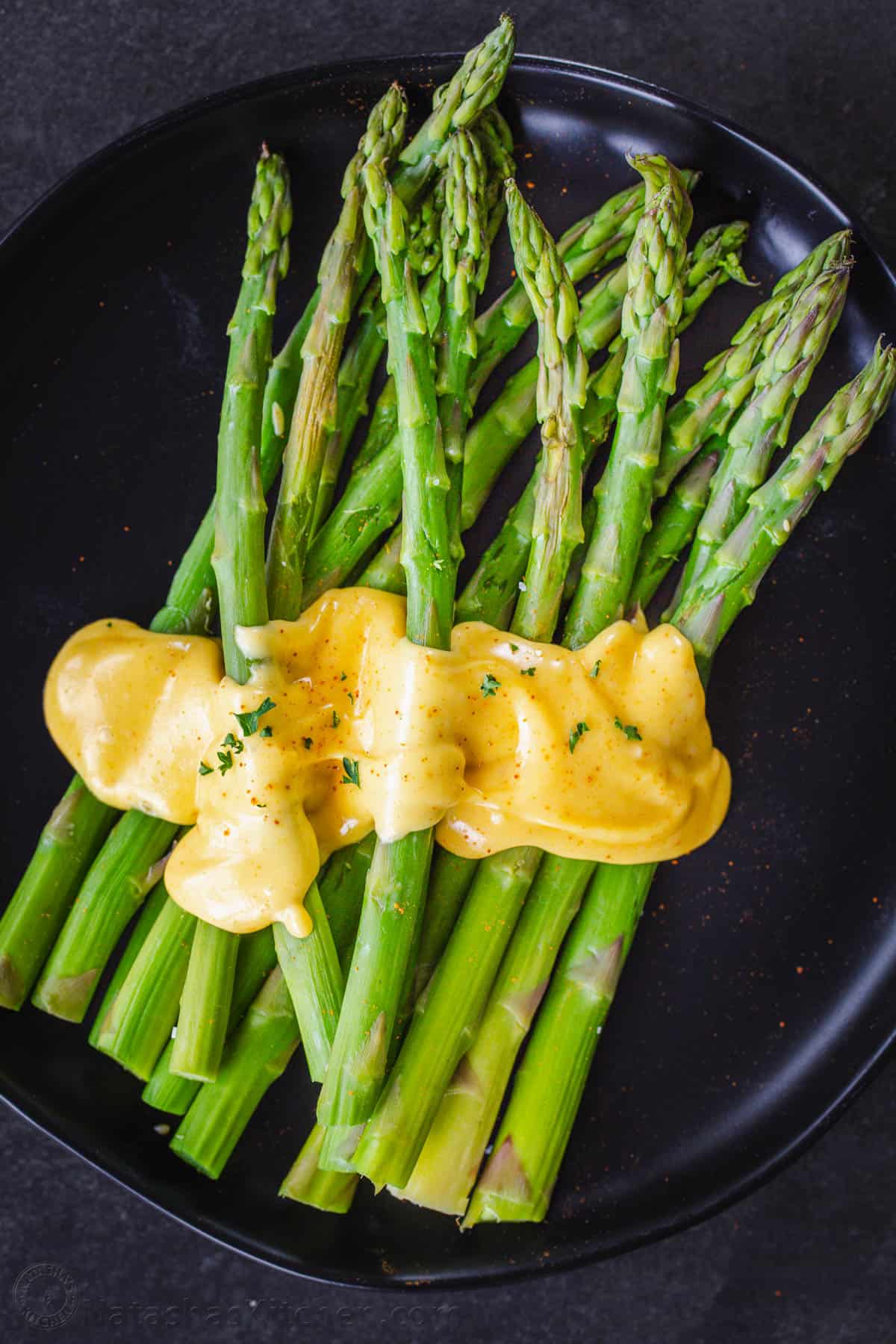
Hollandaise Sauce recipe makes a silky, rich sauce without a blender or double boiler. This recipe is easy to make at home and has all the lemony and buttery goodness you crave to spoon over Eggs Benedict, roasted vegetables, salmon, or steak. This sauce gets rave reviews from my readers, so you know it’s a keeper!

This post may contain affiliate links. Read my disclosure policy.
Helpful Reader Review
“This hollandaise sauce recipe is perfection. It’s the easiest, foolproof recipe resulting in a perfectly lemon creamy hollandaise sauce. My husband had the ‘best benedict of his life’.” – Ashley M ★★★★★
Why This Recipe Works
My stovetop method is easy – it skips the blender, double boiler, and clarified butter. Small pieces of cold butter melt gradually into the egg yolks as you whisk, creating a smooth, creamy sauce in about 10 minutes.
The key is gentle heat and constant whisking. Start over low heat and increase it slightly only if needed so the butter melts without scrambling the eggs.
Once you try this easy method, you’ll want to make hollandaise more often. Spoon it over Poached Eggs, crispy Bacon, and toasted English Muffin in our Eggs Benedict, or serve it with veggies, steak, salmon or burgers.
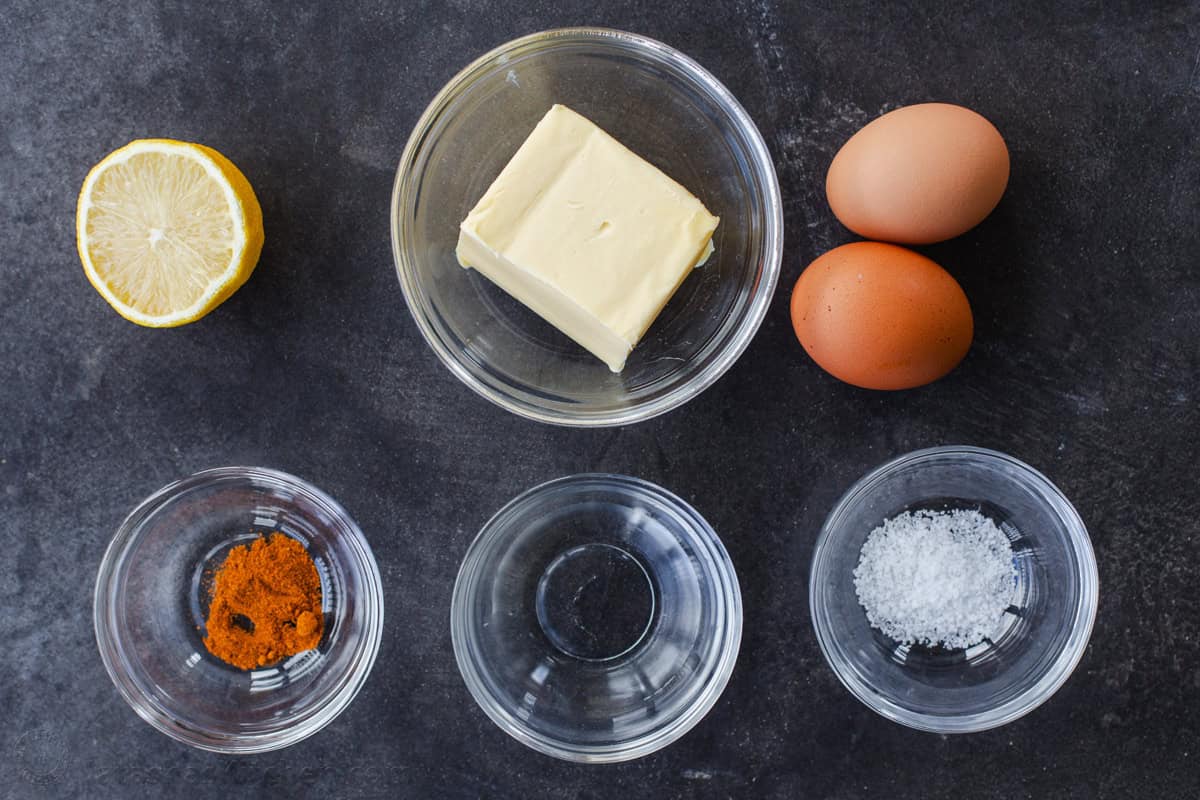
Easy Hollandaise Sauce Ingredients
When preparing Hollandaise, opt for high-quality eggs and butter – it makes a difference in the color and flavor of the sauce.
- Egg yolks – Add richness and help emulsify and thicken the sauce. Save the egg whites for a healthy Souffle Egg White Omelette the next day!
- Lukewarm water – Helps loosen the sauce to form a smooth emulsion.
- Lemon juice – Balances the richness of the butter and helps form a stable, creamy emulsion.
- Dijon mustard – Adds a great layer of flavor and bite to the sauce.
- Unsalted butter -Helps your hollandaise emulsify and thicken up to a creamy consistency. The cold pieces of butter melt slowly as you whisk to make the silky smooth sauce.
- Seasonings – you can add more salt and cayenne pepper to taste.
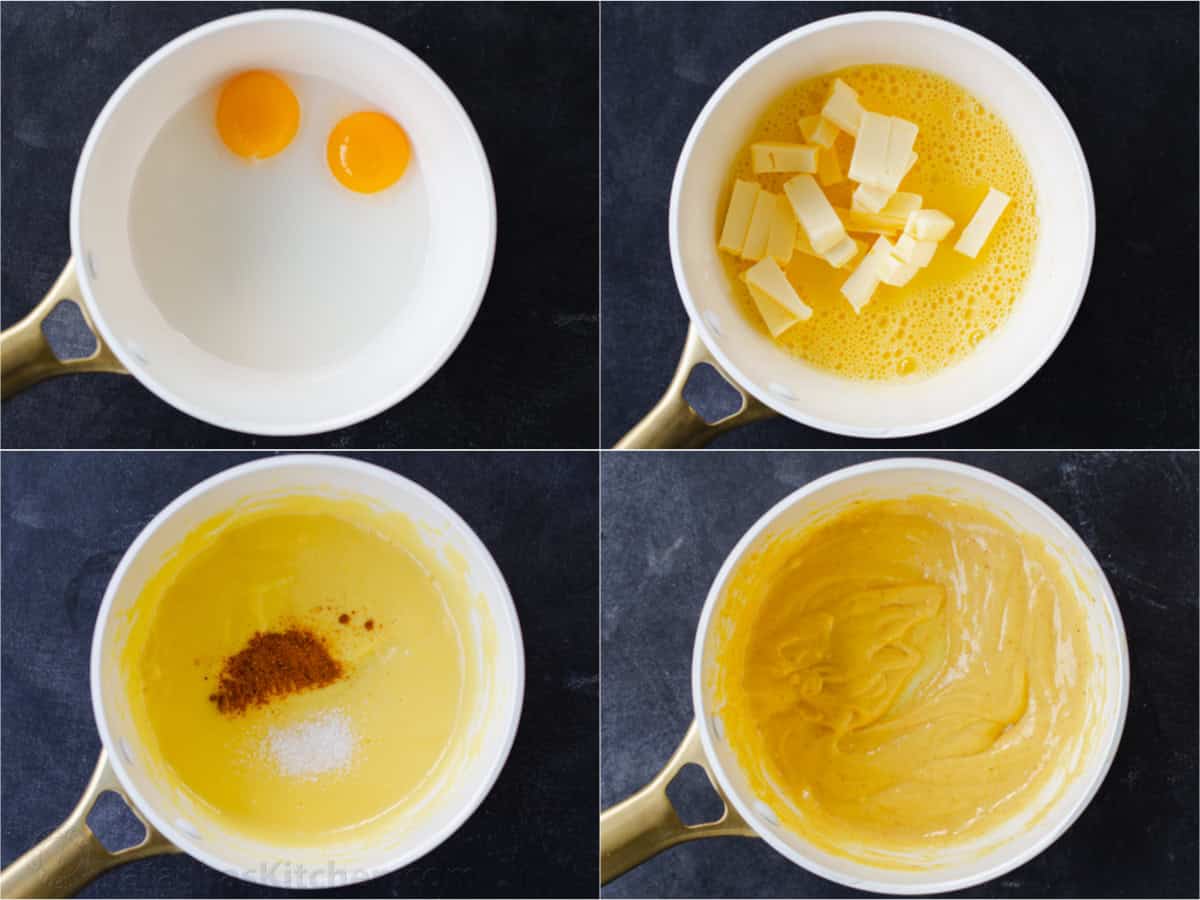
How to Make Hollandaise Sauce
This recipe moves quickly, so measure and prepare all of the ingredients before you begin. Start over low heat and increase it slightly only if needed, whisking constantly so you don’t end up with scrambled eggs.
- Separate the Eggs – Add yolks to a small stainless steel or non-reactive saucepan (avoid aluminum, copper, or cast iron because they can react with the lemon juice) and save whites for another recipe.
- Add water, lemon juice, and Dijon and whisk together until well combined.
- Add Butter – Slice the butter into small pieces and toss them into the saucepan.
- Cook the Hollandaise – Place the saucepan over medium-low heat, whisking the sauce constantly and vigorously until the melted butter turns the mixture frothy. If the butter begins to sizzle or the eggs start to clump, lift the pan off the heat and continue whisking. Cook for about 3 minutes, until the sauce is smooth, slightly thickened, and coats the back of a spoon. A line drawn through the sauce on the spoon should stay clear. The sauce will continue to thicken as it cools.
- Remove the Sauce from Heat – Once thickened, immediately remove the sauce from heat and season it with more cayenne pepper and salt to taste. Serve immediately or cover to keep warm.
Natasha’s Pro Tip
Make sure to whisk the sauce the entire time it’s over heat, or the eggs will scramble!
How to Fix Hollandaise Sauce
Hollandaise sauce can usually be fixed if you catch the problem, so keep a close eye on the sauce.
- Too thick? Whisk in warm water, 1 teaspoon at a time, until it reaches your desired consistency.
- Too thin? Return the pan to low heat and whisk another 15 to 30 seconds.
- Starting to separate? Immediately remove from the heat and whisk in 1 teaspoon of warm water until smooth.
What to Serve with Hollandaise Sauce
Sure, Hollandaise Sauce is great on traditional Eggs Benedict, but it also tastes great on these recipes:
- Over Potatoes – use it as a topping for Potato Wedges, Baked Potatoes, or Boiled Potatoes.
- On Vegetables – For a quick veggie side dish, drizzle the hollandaise over Air Fryer Asparagus, Fried Zucchini, and Air Fryer Broccoli.
- With Protein – Top Salmon, Roasted Pork Tenderloin, Crab Cakes, or Steak.

Storage and Reheating
Hollandaise sauce will have the best texture when served right away. Refrigerate leftover sauce in an airtight container within 2 hours and use within 2 days.
- To Refrigerate: Store in the fridge for up to 2 days.
- To Reheat: This delicate sauce can easily burn or separate, so reheat slowly. Warm the sauce gently over very low heat or in a double boiler, whisking often. Add warm water, 1 teaspoon at a time, if the sauce becomes too thick. Do not let it simmer or boil.
This easy Hollandaise Sauce recipe makes a beautifully smooth and rich topping for classic Eggs Benedict, but also so many vegetables, potato recipes, and main course proteins! If you can whisk, then you can make this classic French sauce in just 10 minutes!
If you’re a lover of French-style breakfast foods, also try your hand at making our Perfect Omelette, Quiche Lorraine, or Crepes.

Easy Hollandaise Sauce

Ingredients
- 2 large egg yolks
- 2 Tbsp lukewarm water
- 2 tsp fresh lemon juice
- 1/2 tsp Dijon mustard
- 8 Tbsp unsalted butter
- 1/4 tsp fine sea salt, or more to taste
- 1/8 tsp cayenne pepper, or more to taste
Instructions
- Separate the Eggs – Add the egg yolks to a small non-reactive* saucepan with water, lemon juice, and Dijon, and whisk until well-combined.
- Add the Butter – Cut the butter into small pieces and add it to the egg mixture.
- Cook the Hollandaise – Place the pot over low to medium-low heat and whisk constantly. As the butter melts, the mixture will become slightly frothy. If the butter begins to sizzle or the eggs start to clump, lift the pan off the heat and continue whisking. Cook for about 3 minutes, until the sauce is smooth, slightly thickened, and coats the back of a spoon. Draw a line through the sauce on the spoon with your finger; it should stay clear.**
- Remove the sauce from the heat immediately. Season with salt and cayenne pepper, adding more seasoning to taste. Serve right away or cover to keep warm. If the sauce gets too thick, whisk in a teaspoon of warm water to loosen it up.
Notes
Nutrition Per Serving
More Homemade Sauces
Homemade sauces always taste better than store-bought, especially freshly made. Try these next: