
How long should you boil eggs? It depends on how you like the yolks—soft, jammy, medium, or fully set. This step-by-step guide includes exact cook times for every level of doneness, plus my favorite tips for perfect, easy-peel eggs every time.
This post may contain affiliate links. Read my disclosure policy.
Quick Answer: How Long to Boil Eggs?
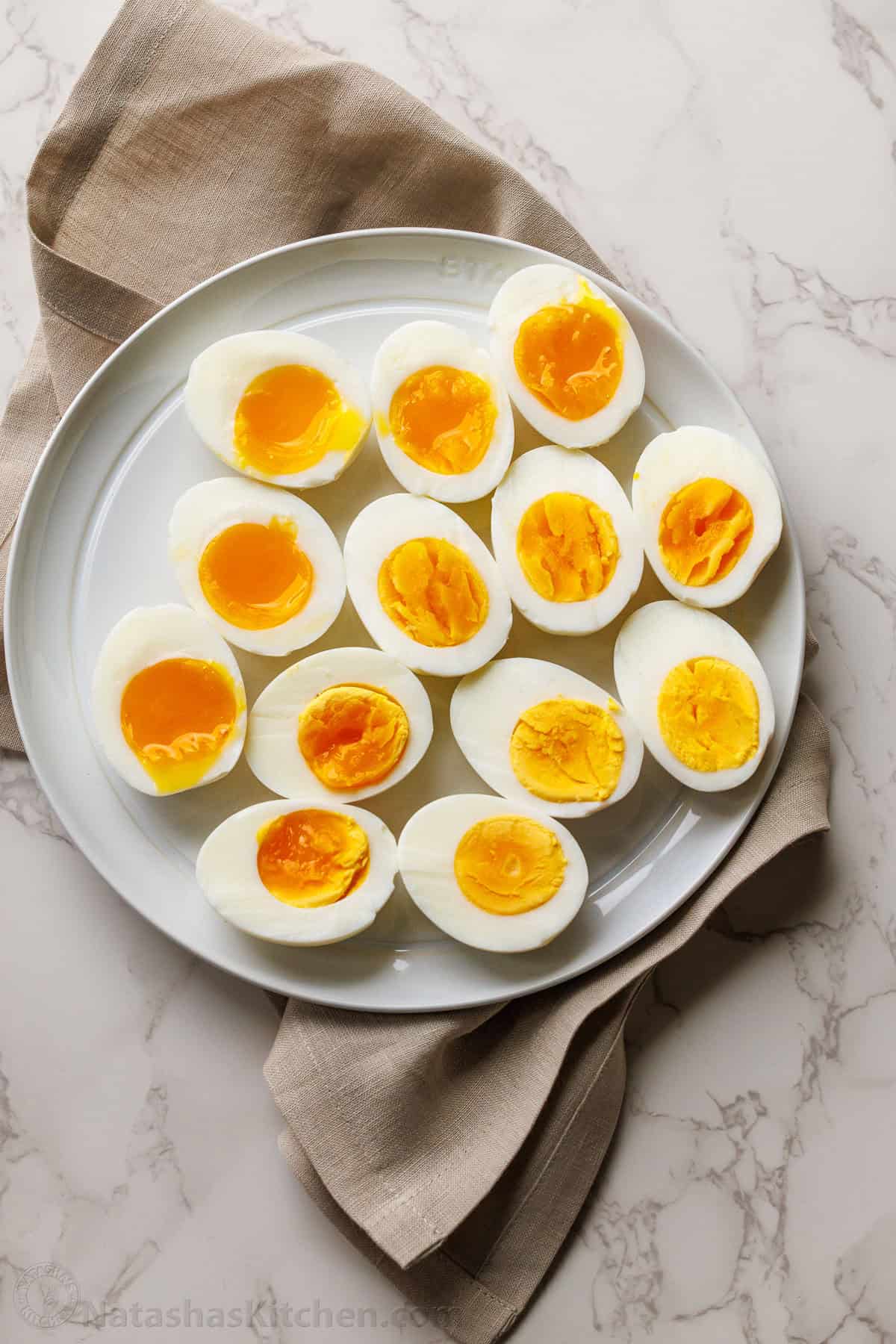
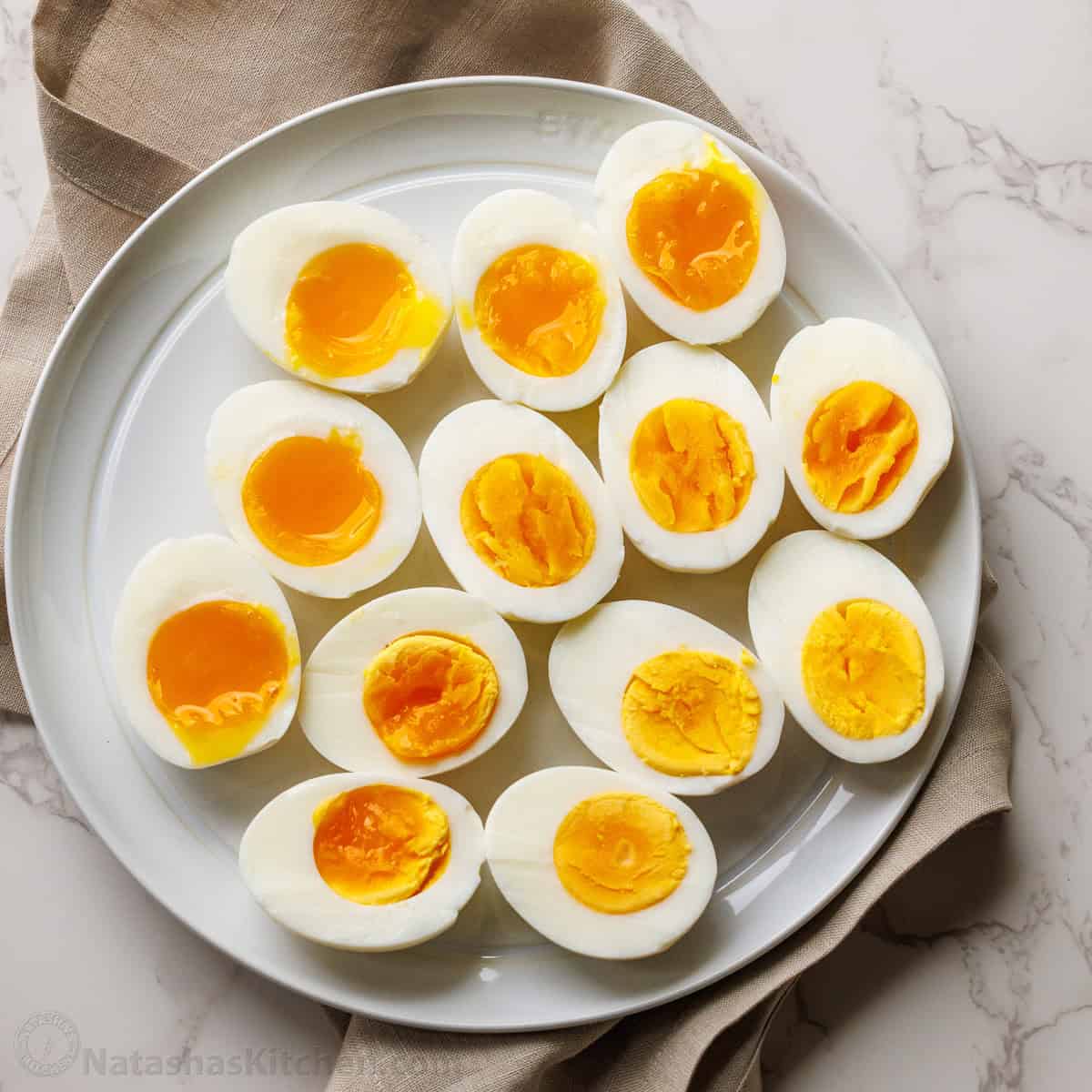
Lower cold large eggs gently into boiling water and cook uncovered to your desired doneness:
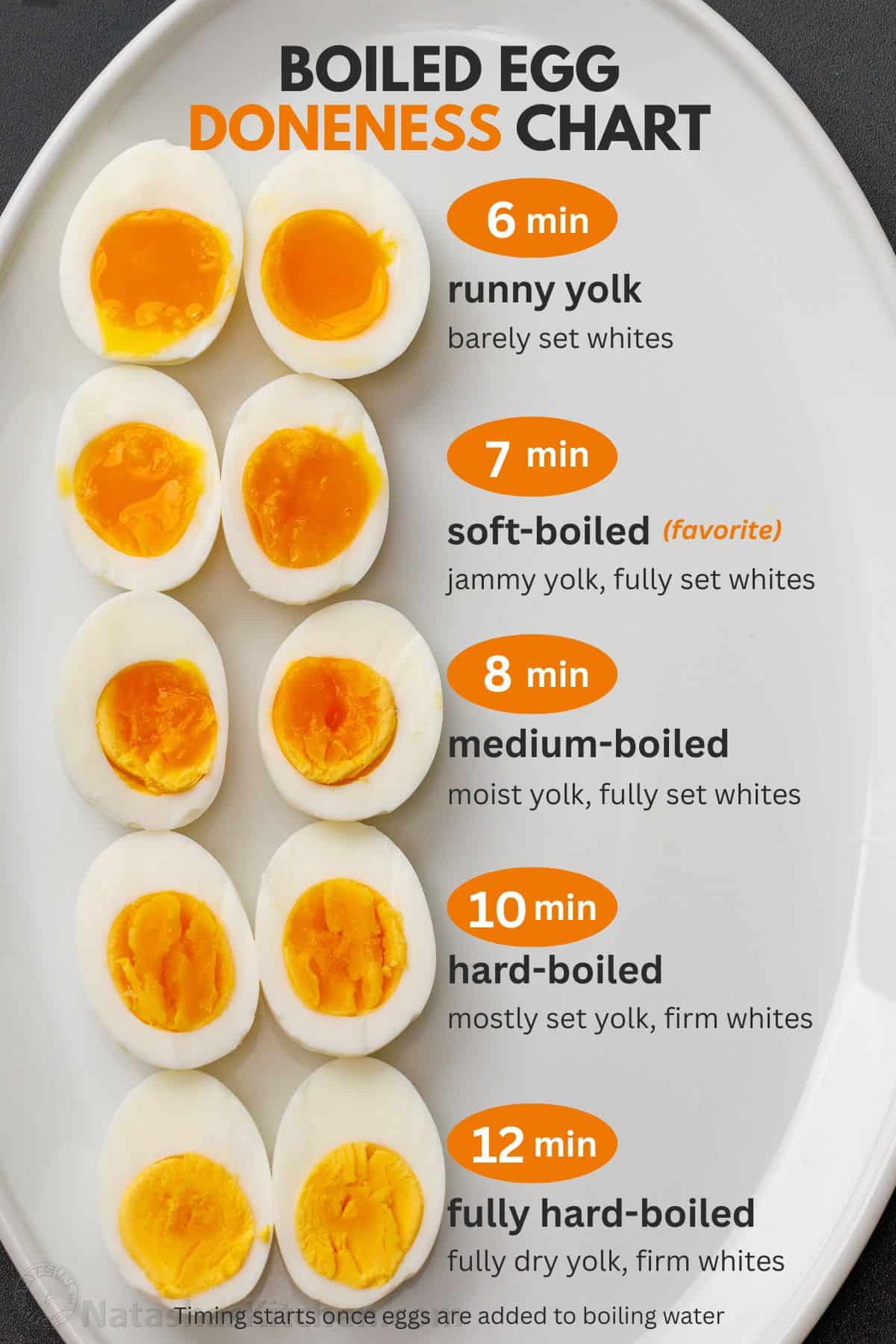
- 6 Minutes: Liquid yolk, soft-set whites
- 7 Minutes: Jammy yolk, fully set whites
- 8 Minutes: Medium-boiled, moist but softly set yolk
- 10 Minutes: Classic hard-boiled, tender yolk
- 12 Minutes: Firm, fully set hard-boiled egg
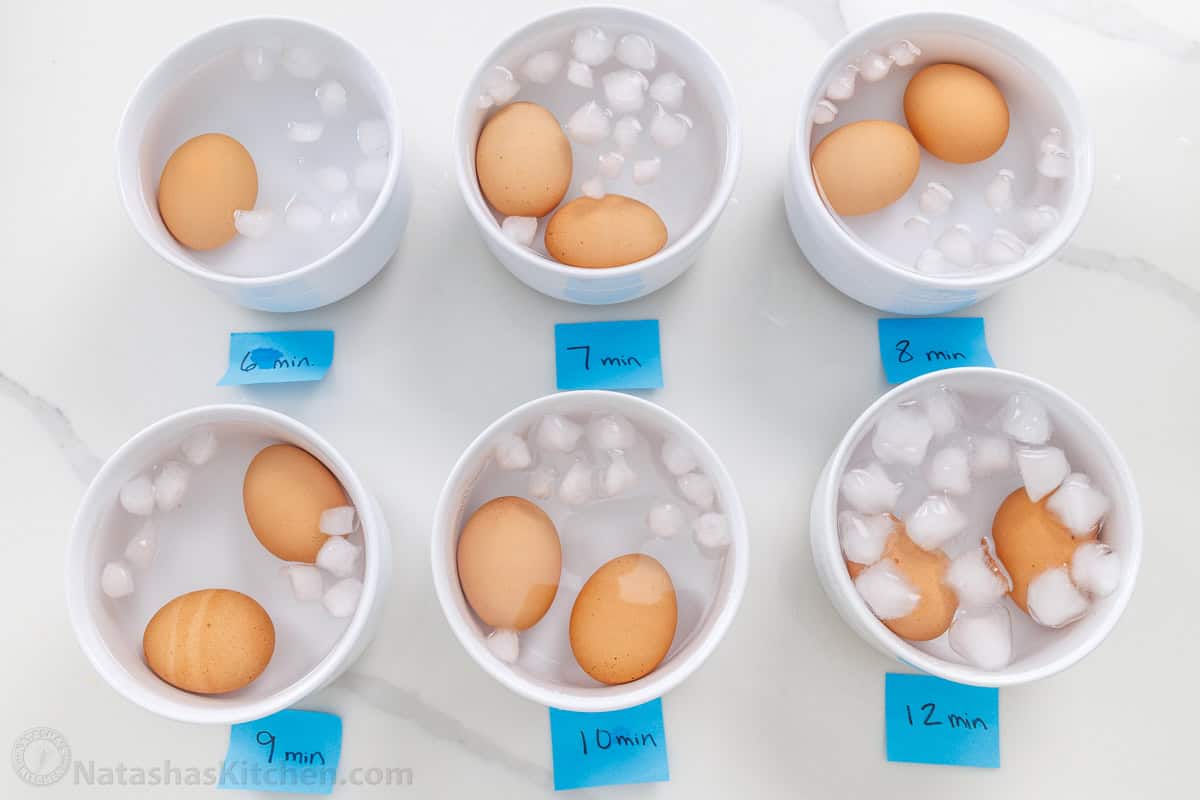
Immediately transfer to ice water for 10 minutes to stop the cooking and ensure easy peeling.
How to Boil Eggs Video
Boiled eggs are one of those simple kitchen basics that are easy to overcook or undercook. Whether you’re making soft-boiled eggs for breakfast, hard-boiled eggs for Egg Salad, or a batch of Deviled Eggs for Easter, my stovetop method makes it easy to cook eggs exactly how you like them. You’ll love how easy they are to peel, too.
Helpful Reader Review
“This detailed guide for how to cook boiled eggs is so helpful! I can never get my boiled eggs cooked right, with this post I can now make perfect boiled eggs every time!” – Valentina ★★★★★
How I Tested This Method
I tested both cold-water and boiling-water starts. Lowering cold eggs directly into boiling water gave me the most consistent cook times and made the eggs significantly easier to peel.
Tips for Perfect Boiled Eggs
- Use a 3-quart saucepan – This easily fits 8 large eggs. Make sure the water covers the eggs by at least 1 inch.
- Lower eggs gently – Use a slotted spoon or skimmer to carefully lower cold eggs into the boiling water so they don’t crack.
- Keep a gentle boil – After adding the eggs, adjust the heat to maintain a steady boil, not a hard, rolling boil.
- Set the timer right away – Start timing as soon as the eggs go into the boiling water.
- Use an ice bath – Chill the eggs for 10 minutes to stop the cooking and help the shells release.

How to Boil Eggs (Soft to Hard-Boiled)
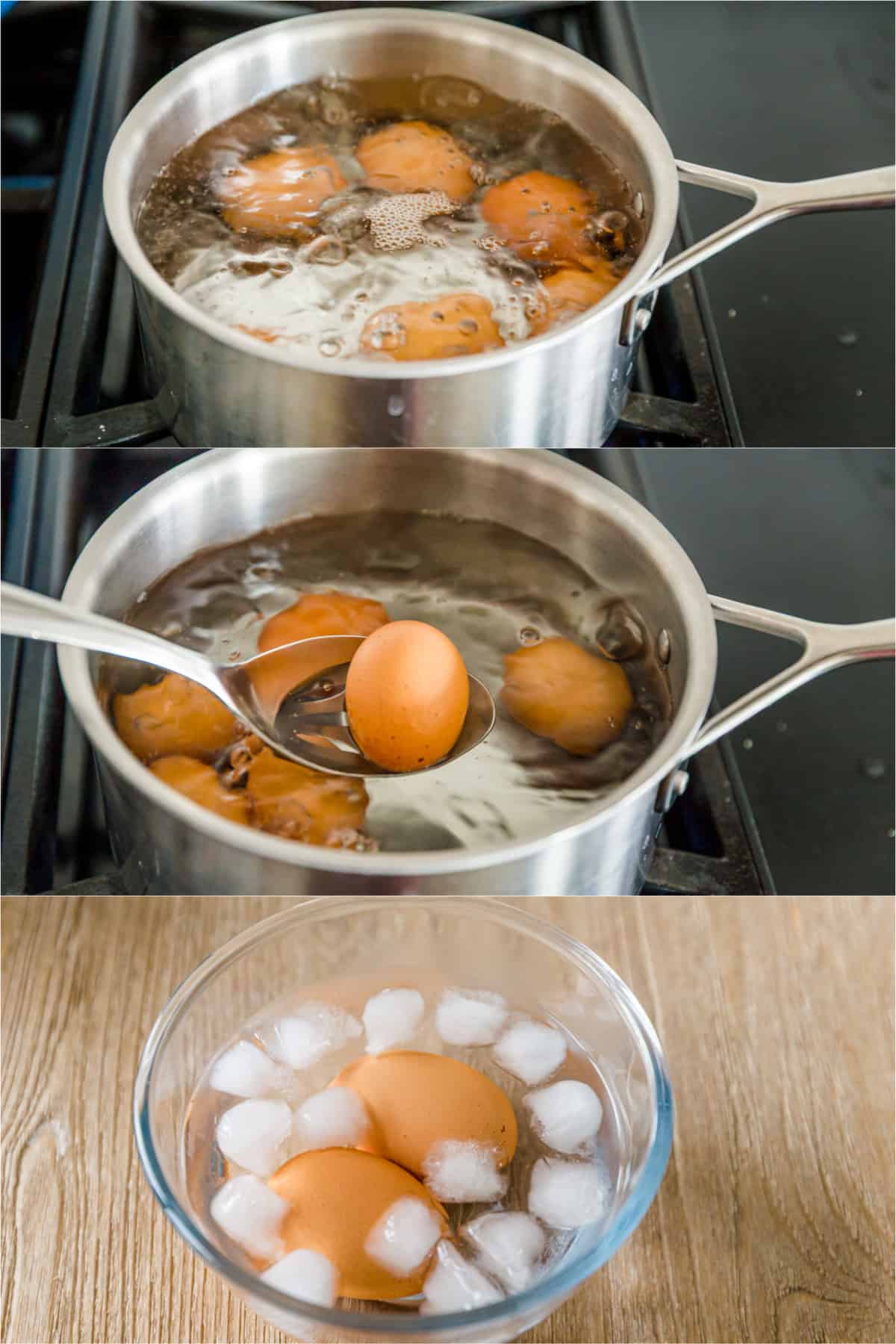
- Boil the water – Fill a 3-quart saucepan with 5 to 6 cups water, or enough to cover the egs by about an inch. Bring to a boil over high heat.
- Add the eggs – Carefully lower cold eggs into the boiling water using a slotted spoon or skimmer. Reduce the heat to keep them at a steady boil.
- Cook to your desired doneness – Once the eggs are in the water, start the timer and cook uncovered according to the timing chart below. While the eggs are cooking, prepare the ice bath.
- Transfer to an ice bath – Use a spider strainer or slotted spoon to transfer the eggs immediately to a bowl of ice water and chill for 10 minutes.
How to Use Boiled Eggs at Different Doneness Levels
Which boiled egg time is best for your recipe?
- 6 Minutes (Runny Yolk): Best for serving in an egg cup with toasted bread for dipping. At less than 6 minutes, the whites may still be loose.
- 7 Minutes (Jammy Yolk): For topping ramen bowls, grain bowls, or toast.
- 8 Minutes (Medium-Boiled): Perfect for a quick, high-protein snack on the go.
- 10 Minutes (Tender Hard-Boiled): The gold standard for mashing into an Egg Salad or Potato Salad.
- 12 Minutes (Firm Hard-Boiled): Best for cleanly slicing over Chicken Cobb Salad, Deviled Eggs, or High Protein Avocado Toast. Cooking longer than 12 minutes increases the chances of a green ring around the yolk.
Best Eggs for Boiling
Egg size and freshness can affect how long eggs take to cook and how easily they peel. Here’s what to know before you start:
- Egg Freshness – Older store-bought eggs are easier to peel. For farm-fresh eggs from backyard chickens, my Instant Pot boiled eggs method makes them easier to peel.
- Size Matters – The timing guide was tested with large eggs, which are the standard size in most recipes. Larger eggs will take longer, and smaller eggs will cook faster.

Does Adding Vinegar or Salt Make Eggs Easier to Peel?
Salt and vinegar are optional. Vinegar may help if an egg cracks, and salt can help reduce how much egg white leaks into the water. I don’t rely on either for easy peeling—the hot-water start and ice bath make the biggest difference.
How to Peel Boiled Eggs Easily
Crack the egg firmly at the wide end where the air pocket is, then peel from that end to get under the membrane. Peeling under cool running water can also help loosen the shell.
If you’re peeling a whole batch for Deviled Eggs, try my Easy Peel Eggs method for peeling several eggs quickly at once.

How to Store Boiled Eggs
Boiled eggs should be refrigerated within 2 hours of cooking. Keep them unpeeled when possible to prevent drying out and odor absorption. If peeled, store them in an airtight container.
- Hard-boiled eggs can be stored in the refrigerator for up to 1 week.
- Soft-boiled eggs can be refrigerated in an airtight container for up to 2 days, though they are best served fresh.
Once you try this boiling-water method, it just might become your go-to way to boil eggs for breakfast, snacks, salads, and Easter eggs.
How to Boil Eggs

Ingredients
- 8 large eggs, cold from the refrigerator (6 to 12 eggs also work)
- 5-6 cups water, or enough to cover the eggs by 1 inch
Instructions
- Fill a large saucepan with enough water to cover the eggs by 1 inch. With the lid off, bring the water to a rolling boil over high heat.
- Gently lower cold eggs into the boiling water (a spider strainer or slotted spoon is helpful), taking care not to crack them.
- Reduce the heat to maintain a steady, gentle boil so the eggs do not bounce and crack. Start the timer as soon as the eggs enter the water and cook for 6 to 12 minutes, depending on your desired doneness. See the timing chart below.
- While the eggs cook, prepare a bowl of ice water. As soon as the timer ends, transfer the eggs to the ice bath and let them chill for 10 minutes before peeling or storing.*
Notes
- Boil 6 min: Runny yolks with soft-set whites
- Boil 7 min: Soft-boiled, jammy center, set whites
- Boil 8 min: Medium-boiled, soft-set yolk, set whites
- Boil 10 min: Tender hard-boiled egg, firm whites
- Boil 12 min: Fully hard-boiled eggs with firm, dry yolk
Nutrition Per Serving
Filed Under
Recipes with Boiled Eggs
Boiled eggs are perfect for quick breakfasts, snacks, salads, and appetizers. Here are some of my favorite ways to use hard-boiled eggs:
- Chicken Cobb Salad
- Boiled Egg Chocolate Pudding
- Guacamole Stuffed Eggs
- Chicken Avocado Salad
- Easter Egg Chicks
- Salmon Cobb Salad
- Potato Salad
- Greek Cobb Salad
- Creamy Potato Salad
- Deviled Egg Chicks


The cold water method did not work for me in terms of easy peeling. It was so difficult I turned them into chopped egg salad and started over because the eggs were all butchered. Finding the membrane was almost impossible. It would tear into tiny bits. The shell would also crack into tiny pieces.
My husband loved the recipe, though. The flavors were a perfect combination, he said.
I’m happy you enjoyed that! I have not had that experience, so sorry that didn’t work out for you.
eggs no need for that ,just add a glut of oil to water prior to eggs goin in boil to your liking and cool den EASY peel crack large end of chess first
a glug , couple tablespoons ,
Same here. I always use that method to cook and finish my eggs and still peeling is hit or miss.
Hi Natasha,
I love your recipes, they are always my go-to! I noticed you had a different recipe for boiled eggs before – bringing to a boil, then covering with the lid and turning the heat off but leaving them on for 15 minutes.. I can’t seem to find that recipe now?
Hi Olya, that was this same recipe that we updated. We used to do it that way but when we moved to use a gas stove, we realized that method is not consistent across various cooktops. An electric cooktop maintains its heat while a gas one does not. Essentially, we were bringing the eggs to a boil then covering and letting it sit with the heat off for 15 minutes.
Oh ok, thank you for the detailed response! I thought I was losing it that I couldn’t find the recipe anymore lol. Eggs turned out perfect with this method too!!
You’re welcome, Olya. I’m glad that helped.
Baking powder makes then much easier to peel also!
Great tip! Thank you for sharing that with me.
Great method. I have a terrible habit of overcooking eggs and this is a super helpful chart. I had a thought about the salt, though. I learned in my college cooking courses that salt in the water will stop cracked eggs from leaking egg into the water. Sometimes eggs will crack a little bit when the water really gets roiling and the salt helps keep the egg inside the shell.
Thank you so much for sharing that wonderful tip with us, Betsy!
Thank you for all the handy tips and also for the guide to show how long to get the egg you want!
You’re welcome, Krissy! I’m so glad that was helpful!
The secret to ” easy peel” eggs is to bring the water to a boil first, then add your eggs carefully with a slotted spoon. Works every time! Even with fresh backyard chicken eggs!!! Try it and you will see….
I saw this on youtube and was amazed and how the shell comes off in almost one piece. No more starting with cold water ever again. Thanks for mentioning this. Best tip ever!
Thank you so much for sharing that with me and for giving great feedback, Janis!
I too learned of this method from “Cook’s Illustrated” Magazine years ago and I use this method all the time! It never fails.
another old time secret add oil to water it will penetrate shell only and eggs will peel so EASY try it
We make so many egg salads and deviled eggs and use your techniques. Works every time.
That’s so awesome!! Thank you for sharing that with me, Jen!
You’re right, perfection every time!
Hi Stephanie, I’m so glad you like this method. It’s our go-to and works every time.
I love how you teach people to do their eggsBUT. As an old retired Home Economist, you are calling them by the wrong name. The correct name is hard-cooked eggs. You will never find a recipe for a hard-boiled egg in a good cookbook. Listed as hard-cooked eggs
Hi Jane, thank you for the tip 😀. I will make an adjustment.
I always let my water come to a boil first before adding eggs, they peel alot easier. Cook them for 7 minutes. Perfect every time.
Thank you so much for sharing that with me, Randy!
Hi Natasha how long should I boil them for? how long do you boil them for
Hi Dawn, we have that listed in the recipe with timer tips. Anywhere from two to nine minutes depending on how to set you like the egg.
I’ve never heard of that, Jane. Language does change over the years!
Great method Brenda! Thanks for sharing 🙂
purtroppo la grande tristezza è la traduzione
sul fondo di una pentola sistemare un tovagliolo appoggiare le uova “vecchie” di alcuni giorni, meglio se in uno solo strato, aggiungere un cucchiaio di sale, portare a ebollizione e bollire a fuoco moderato per 10/15 minuti.Togliere dal fuoco e passare subito le uova, ancora nella pentola, sotto l’acqua fredda corrente,per un paio di secondi, e poi lasciarle freddare. Buon appetito!!!
Thank you for sharing that with us Erika.
Thank-you, Thank-you, Thank-You! Overcooked green tinged yolks are a pet peeve of mine, … as some people have recently noticed.Also a former Home Ec teacher.
My mother taught me place the eggs in the pot add water bring to a boil and after they come to a boil reduce to simmer for 10 minutes then cool off add ice and Walla . They have always been perfect no green no gray just beautiful perfect yolks .
Thank you for sharing! 🙂
I will try that:) and im just using store bought eggs! i will sure let u know:) thnx again for your hard work:)
I did alot of boiling eggs this past weekend, for salads, for egg coloring and for some reason this method didnt work for me either:( but i read all the comments and i’ll try other versions as well 🙂
Do you like yours a little more soft-boiled or what didn’t work about it?
I meant the whole peeling part didnt work as great ;( my husband was helping peel them and he said that i probably didnt follow the steps correctly:) lol so i’ll do it again and hopefully it will work:) your other receipies worked good for me, especially Kylichi!!!! the BOMB!!! my husband gave me an AA++:) thanks again:)
Maybe try to add 1/2 tsp of salt next time to the water and see if that will make a difference. Let me know how they will turn out next time and what kind of eggs are you using?
Try bringing the water to a boil before you add the eggs. It makes them much easier to peel.
In my former profession as a chef I have cooked hundreds, upon hundreds of hard boiled eggs in my day. Natasha your way is pretty much how I did it with one exception, I would add a teaspoon or so of salt to my water when I would boil it. I would generally boil for 15 min, then immediately put under cold running water, until eggs were chilled. Ice bath works as well or better. I think bringing eggs to room temperature (about) before boiling helps as well. I seem to remember from school that salt reacts with the calcium in the egg shell to make it harder, which in turn allows the egg to crack and peal better. Just a thought. But your method works for you, (obliviously) keep doing it. I really love the time and effort you put into each post, keep up the GREAT work.
By the way my new profession couldn’t be more different than being a chef. I am a welder. Lol 🙂
My other profession is very different too; I am a full-time RN. But I think our different roles make us more interesting people. You know all about metal and I know how to poke people with a syringe. lol. I like your tip with the salt. I’ll probably incorporate that in my next egg batch and see what happens 🙂 Thank you for your thoughtful comment!
Hi all,
I used to have hard time peeling eggs, until I read somewhere this method: after the eggs are cooked, crack them all over, and put them in an ice bath. The idea is, that the water will seep in between the shell and the egg, and it will be easier to peel. So far, I’ve tried this method only few time, and it worked! Hope that helps.
That wouldn’t work for easter eggs though, since the idea is to dye them and only crack them later.
XPUCTOC BOCKPEC!!!!
Happy Easter everyone.
Thank you for sharing this tip Oksana, we are all learning from each other :).
I know that everyone likes their eggs differently. My parents, for example, like to eat their eggs when they are cooked but still runny. I really, really don’t really like when my eggs are runny or too dry, because then I can’t swallow them and dry out my mouth. So, this is how we cook our store-bought eggs and they work the same every time…. Boil water and add your eggs very slowly into the boiling water (let the heat continue to boil the water-meaning don’t turn off the heat), look at the time. Give 7 minutes and you’ll have a slightly cooked but still very wet egg-yolk. Give 10 minutes and you’ll have a cooked and very lightly-moist egg-yolk. Then drain the water and pour very cold water over the eggs (while they are still in the saucepan) for a minute or so. I sometimes leave the eggs in the cold water or eat them right away.
Tanya, thank you for sharing your version :). Everyone like their eggs differently so this is very helpful.
this method never works for me. I use this egg toaster that i got on amazon and now i get perfect eggs , medium boiled, hard boiled and soft.
I’ve never tried an egg toaster before. Sounds interesting! Does it take up alot of counter space?
Well i did not have toaster when i purchased this , it is size of toaster with a side area for cooking eggs and steaming sausage etc. I do not find it huge and my kitchen is tiny, i have 2 small spaces of counter.
I make hard cooked eggs with easy shell removal by putting the eggs in cold water, cover, bring to a hard boil, turn off the heat. set timer for 10 minutes strain off water and run cold water over the egg until I can handle it then smash hard the blunt end against the edge of the sink so the shell and membrane is broken then put in ice water for 10 minutes and it will peel easily.
HI Stu, thanks so much for sharing!
That’s awesome 🙂 I will defiantly try your way of boiling eggs. I was experimenting with natural coloring. It was fun to see how it turned out. http://leascooking.blogspot.com/2013/03/coloring-eggs-naturally-experiment.html
Those look great! I might try different colors next year!
You know something easy as hard boiled eggs isn’t that easy. Thank you for this awesome post!! I will now know how to get perfect, yellow egg yolks instead of green. Eeww!
I had mis-colored egg yolks for a long time before we discovered this method 😉
No matter what method I tried, natural fresh eggs from my backyard still don’t peel easily. I’ve heard it all depends on how fresh the eggs are. (if theyre fresh, they’re hard to peel). Do you know?
I won’t pretend to be an expert in that area, but this method seems to have better results with peeling store-bought eggs so you don’t lose half of the egg with the peel. With the store-bought ones, it’s hard to say how fresh they really are, but if you try this method with natural fresh eggs, I’d love to hear your review on the peeling situation.
I have chickens and i usually have a carton or two of fresh eggs hang out in the fridge for at least a week before i boil them. You see, the fresher the egg, the more the membranes cling to the shell, making peeling them almost impossible. The longer the eggs sit the more the membranes separate from the shell, making peeling easier. Believe it or not, the eggs you buy at the store have sat in the carton for at least a good month; it’s sad but true, that is why store bought eggs are so much easier to peel.
Thank you for sharing that awesome info! That’s great to know.
I read somewhere that fresh eggs do end up being hard to peel. Lately, even with your method, my eggs have been difficult to peel…..the only thing I can think of is that they are too fresh, so I’ll have to plan ahead and let them sit a while before I cook them and see if that helps. . .frustrating to say the least.
Zina you are the second person to say that about fresh eggs! I guess it’s good and bad that store-bought eggs have been sitting awhile! 😉
I would have to agree with Marina about farm fresh eggs, we also have free range chicken and refrigeration is key before using the eggs for boiling them, also using salt helps
If you add salt to the water, it will be much easier to peel them! I also have home eggs.
I usually add salt as well, but haven’t on this one just to see the difference and still was able to peel them very easy. Adding salt to home eggs is a great idea :).
We have used electric egg cookers for years. The first was a West Bend which we had for about 20+ years; our present one is Dash. Both had the ability to do soft cooked to hard cooked. It has a base that has a heating element in it and a rack to hold the eggs. You add the right amount of water, prick a hole in the large end of an egg and put it in the rack with the hole end up, cover the eggs with the domed top, push the button and eggs are cooked when the buzzer goes off. I usually let them sit in the unit … unplugged… for a minute or two and plunge them in the icy water until chilled.
Hi Cheryl, that sounds like a wonderful kitchen tool. Thanks for sharing that with us.
I used this basic method with my eggs that were only a couple of days old, only I had read somewhere that doing another couple of minutes back in the hot and then in the ice water might help. It did. They don’t peel “perfectly” but they peel very much nicer than they were!
Thanks so much for the tip! 🙂
My sister raises chickens and therefore has only fresh eggs. She steams the eggs in a steamer basket so they are not sitting in the water. She brings the water to boil and then steams the eggs for 12 -15 minutes, then puts them in an ice bath. They peel perfectly every time.
That is such a great tip! I just read your comment to my Mom and husband. We will try it! Thanks!